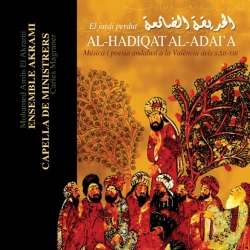
Ibn Zaqqát
Dia de tempestat
Released Album
Recent Album

Works Info
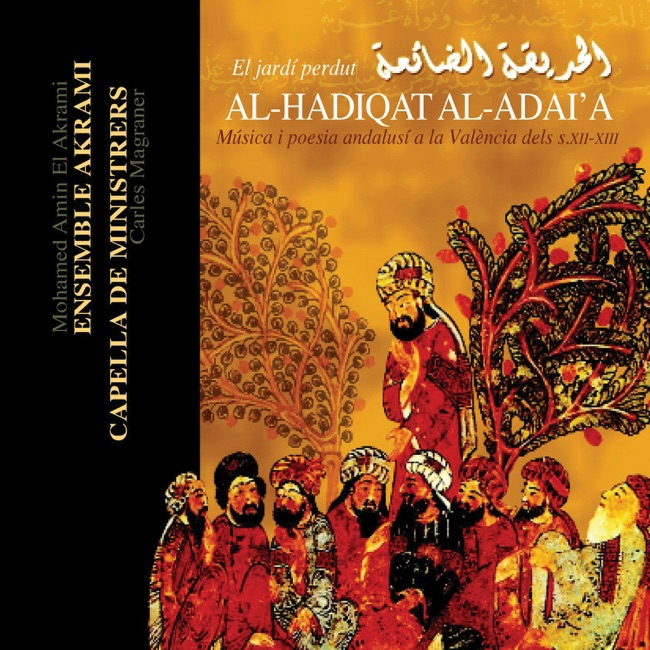
Composer:Ibn ZaqqátGenre:VocalAverage_duration:7:09"Dia de tempestat" is a musical composition by the Andalusian composer Ibn Zaqqát. It was composed during the 13th century, during the height of the Islamic Golden Age in Al-Andalus. The piece is a part of the Andalusian classical music tradition, which was heavily influenced by Arabic and North African musical styles. The premiere of "Dia de tempestat" is not recorded, but it is likely that it was performed in the royal courts of Al-Andalus, where Ibn Zaqqát was a prominent musician. The piece is divided into several movements, each with its own distinct characteristics. The first movement of "Dia de tempestat" is marked by a slow, mournful melody played on the oud, a traditional Arabic stringed instrument. This is accompanied by a steady, rhythmic beat played on the darbuka, a type of drum. The overall effect is one of sadness and longing. The second movement is more lively, with a faster tempo and a more complex melody. The oud is joined by other instruments, including the qanun, a type of zither, and the nay, a type of flute. The rhythm becomes more intricate, with the darbuka and other percussion instruments playing off each other in a complex interplay. The third movement is marked by a return to the slower, mournful melody of the first movement. However, this time the melody is played on the nay, giving it a different character. The other instruments join in gradually, building to a climax before fading away again. Overall, "Dia de tempestat" is a hauntingly beautiful piece of music that showcases the rich musical traditions of Al-Andalus. Its use of traditional Arabic and North African instruments, combined with its complex rhythms and melodies, make it a masterpiece of Andalusian classical music.More....
Works Music
Released Music