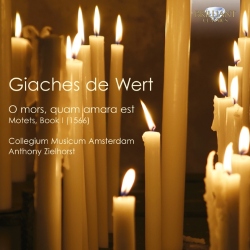
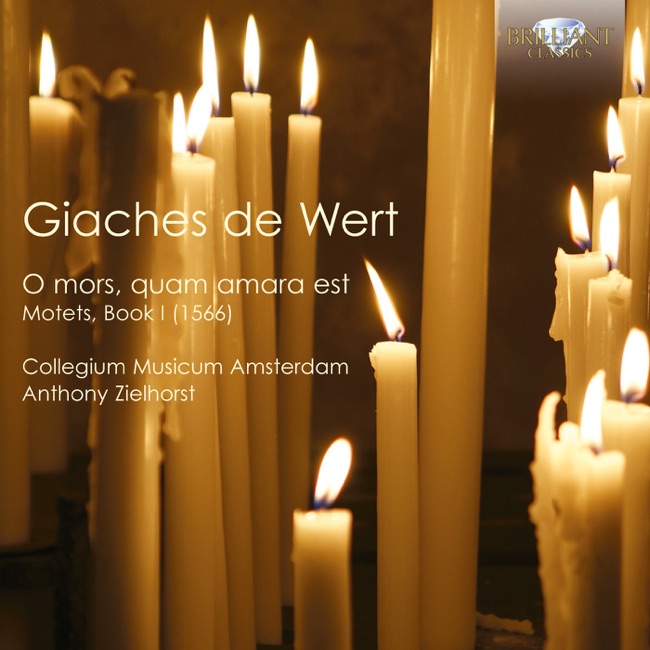
Giaches de Wert
Omors, quam amara est
Released Album
Recent Album
Works Info
Composer:Giaches de WertGenre:VocalStyle:MadrigalAverage_duration:6:14"Omors, quam amara est" is a sacred motet composed by Giaches de Wert, an Italian composer of the late Renaissance period. The piece was composed in the late 16th century, around 1581, and was premiered in Mantua, Italy. The motet is written for six voices, with two sopranos, alto, two tenors, and bass. It is divided into three movements, with each movement featuring a different text. The first movement is based on the Latin text "Omors, quam amara est memoria tua," which translates to "Death, how bitter is the memory of you." The second movement is based on the text "Miserere mei, Deus," which translates to "Have mercy on me, O God." The third and final movement is based on the text "In pace in idipsum," which translates to "In peace, in the same place." The motet is characterized by its use of chromaticism and dissonance, which were common features of the late Renaissance period. The use of chromaticism creates a sense of tension and unease, which is appropriate for the text of the first movement, which deals with the bitterness of death. The dissonances are resolved in a way that creates a sense of release and resolution, which is appropriate for the text of the second and third movements, which deal with mercy and peace. Overall, "Omors, quam amara est" is a powerful and emotional piece of music that showcases Giaches de Wert's skill as a composer. Its use of chromaticism and dissonance make it a unique and memorable work that is still performed and appreciated today.More....