John Cage
Cheap Imitation
Released Album
Recent Album
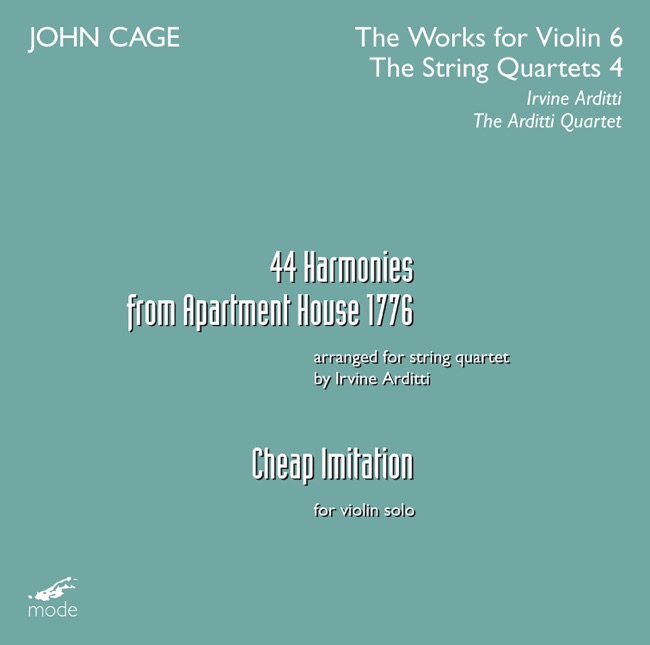
Featured Album

Works Info
Composer:John CageGenre:ChamberStyle:Chamber MusicCompose Date:1977Average_duration:31:52John Cage's "Cheap Imitation" is a composition for solo piano that was composed in 1969. The piece was premiered on May 27, 1969, at the University of Illinois by pianist David Tudor. The composition is based on Erik Satie's "Socrate," a work for voice and piano that was composed in 1918. "Cheap Imitation" is divided into four movements, each of which is based on a different section of Satie's "Socrate." The first movement is based on the opening section of Satie's work, while the second movement is based on the second section. The third movement is based on the third section, and the fourth movement is based on the final section. The characteristics of "Cheap Imitation" are typical of Cage's style. The piece is characterized by its use of chance operations, which were a hallmark of Cage's compositional approach. In "Cheap Imitation," Cage used chance operations to determine the placement of notes and the duration of silences. The result is a composition that is highly unpredictable and constantly changing. Another characteristic of "Cheap Imitation" is its use of indeterminacy. Cage believed that music should be open to interpretation and that the performer should have a degree of freedom in how they interpret the score. As a result, "Cheap Imitation" is notated in a way that allows for a great deal of interpretation on the part of the performer. Overall, "Cheap Imitation" is a fascinating example of Cage's approach to composition. By using chance operations and indeterminacy, Cage created a work that is highly unpredictable and constantly changing, yet still retains a sense of coherence and structure.More....
Works Music
Released Music
Featured Music