Milton Babbitt
Canonical Form
Released Album
Recent Album
Works Info
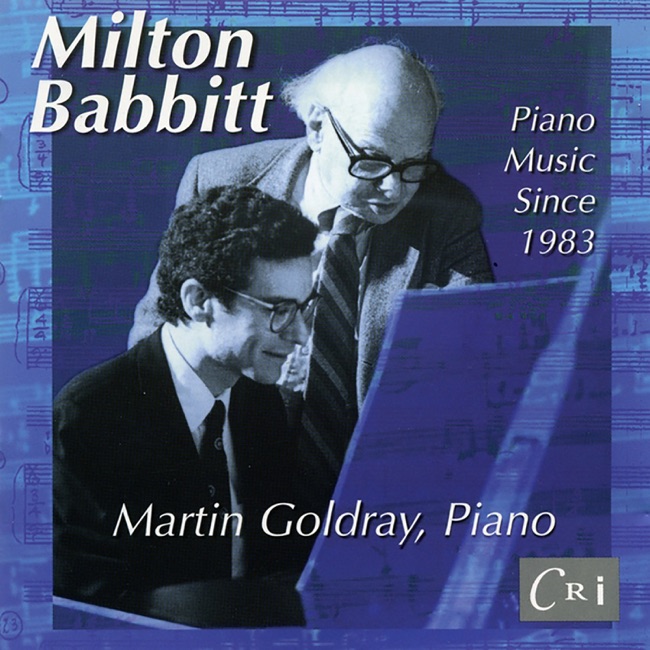
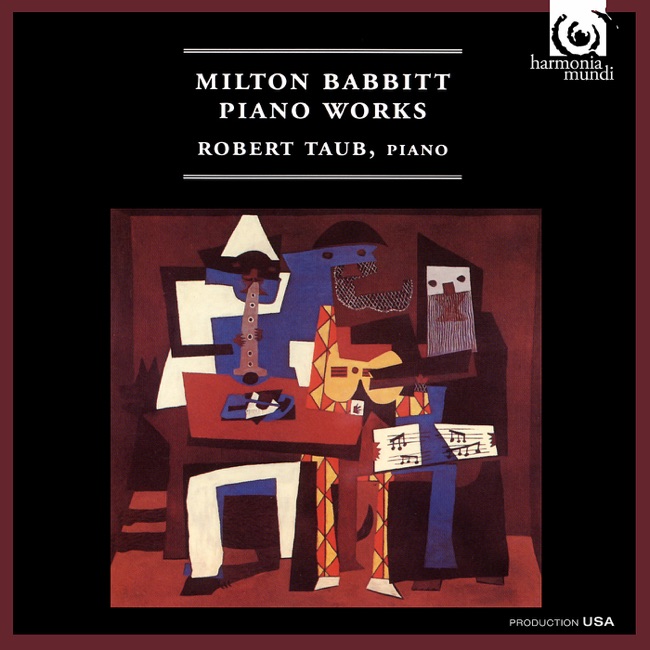
Composer:Milton BabbittGenre:KeyboardStyle:CanonAverage_duration:13:54Milton Babbitt's "Canonical Form" is a composition for solo piano that was composed in 1983. The piece was premiered on April 14, 1984, by pianist Robert Taub at the Juilliard School in New York City. The composition consists of three movements, each of which explores different aspects of the concept of "canonical form." The first movement, titled "Preliminary," introduces the basic material that will be developed throughout the piece. The second movement, "Canonical," is the longest and most complex of the three, and features a series of canons that are layered on top of each other in a complex and intricate pattern. The final movement, "Epilogue," brings the piece to a close with a return to the material from the first movement. One of the defining characteristics of "Canonical Form" is its use of serial techniques. Babbitt was a leading figure in the development of serialism, a compositional technique that involves the use of a series of pitches, rhythms, or other musical elements as the basis for a composition. In "Canonical Form," Babbitt uses a series of 12 pitches as the basis for the entire piece, and the canons in the second movement are constructed using a series of rhythmic values. Another characteristic of "Canonical Form" is its use of complex rhythms and polyrhythms. The canons in the second movement are constructed using a variety of rhythmic values, and the resulting patterns can be quite complex and difficult to follow. Additionally, the third movement features a series of polyrhythms, where different rhythms are played simultaneously, creating a complex and layered texture. Overall, "Canonical Form" is a challenging and complex piece that showcases Babbitt's mastery of serial techniques and his ability to create intricate and complex musical structures.More....
Works Music
Released Music