Johann Friedrich Fasch
Sonata for 2 oboes, bassoon & continuo in G minor
Released Album
Recent Album
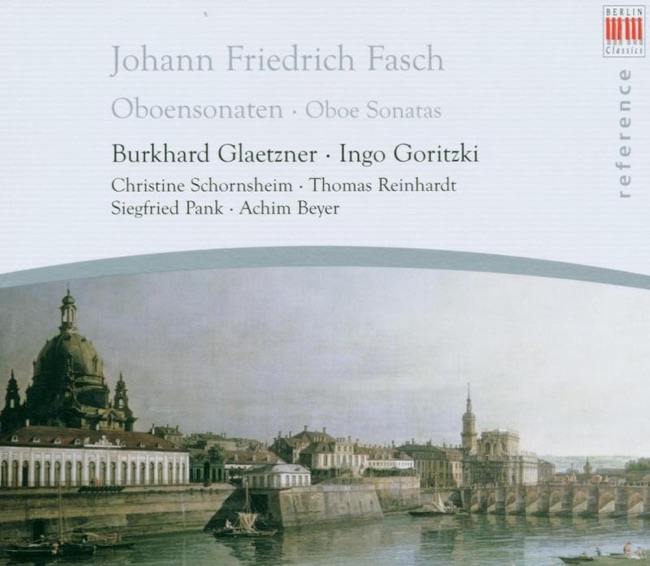
Works Info
Composer:Johann Friedrich FaschGenre:ChamberStyle:SonataAverage_duration:9:40Movement_count:4Movement ....Johann Friedrich Fasch's Sonata for 2 oboes, bassoon & continuo in G minor is a Baroque chamber music piece that was composed in the early 18th century. The exact date of composition is unknown, but it is believed to have been written between 1720 and 1730. The sonata is comprised of four movements and is approximately 10 minutes in length. The premiere of the sonata is also unknown, but it is likely that it was performed in a chamber music setting, possibly in a private residence or at a court. Fasch was a prolific composer of instrumental music, and his works were highly regarded during his lifetime. The first movement of the sonata is marked "Adagio" and is in G minor. It begins with a slow, mournful melody played by the two oboes in unison. The bassoon and continuo provide a steady, rhythmic accompaniment. The movement is characterized by its expressive, melancholy mood and its use of counterpoint between the two oboes. The second movement is marked "Allegro" and is in G major. It is a lively, dance-like movement that features a playful melody played by the two oboes. The bassoon and continuo provide a driving, rhythmic accompaniment. The movement is characterized by its energetic, joyful mood and its use of imitative counterpoint between the two oboes. The third movement is marked "Largo" and is in B-flat major. It is a slow, lyrical movement that features a beautiful melody played by the two oboes. The bassoon and continuo provide a gentle, flowing accompaniment. The movement is characterized by its peaceful, contemplative mood and its use of ornamentation and embellishment in the oboe parts. The fourth and final movement is marked "Allegro" and is in G minor. It is a fast, lively movement that features a virtuosic melody played by the two oboes. The bassoon and continuo provide a driving, rhythmic accompaniment. The movement is characterized by its energetic, joyful mood and its use of imitative counterpoint between the two oboes. Overall, Fasch's Sonata for 2 oboes, bassoon & continuo in G minor is a beautiful example of Baroque chamber music. Its expressive melodies, intricate counterpoint, and rhythmic vitality make it a joy to listen to and perform.More....
Works Music
Released Music
1
2:10
2
2:2
3
2:33
4
2:17
5
2:2
6
2:28