


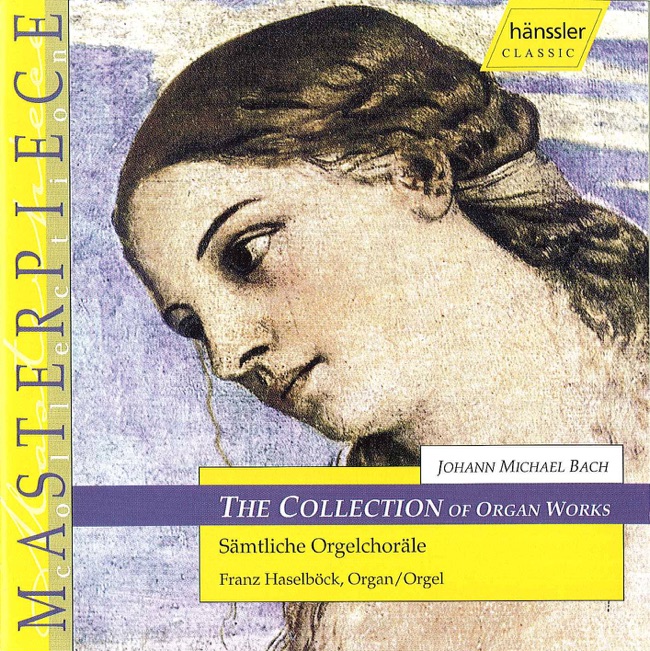
Johann Michael Bach
Dies sind die heilgen zehn Gebot
Released Album
Recent Album
Works Info
Composer:Johann Michael BachGenre:KeyboardStyle:Chorale PreludeAverage_duration:1:38Johann Michael Bach, a German composer of the Baroque era, composed "Dies sind die heilgen zehn Gebot" (These are the Holy Ten Commandments) in 1678. The piece is a sacred choral work that was written for a choir of four voices (soprano, alto, tenor, and bass) and a basso continuo. It is a musical setting of the Ten Commandments, which are a set of biblical principles that are central to the Christian faith. The piece is divided into ten movements, one for each of the Ten Commandments. Each movement is relatively short, lasting only a few minutes, and is written in a simple, homophonic style. The text of each movement is taken directly from the Bible and is sung in German. The first movement, "Ich bin der Herr, dein Gott" (I am the Lord thy God), sets the tone for the piece with a majestic opening that features all four voices singing in unison. The second movement, "Du sollst keine andern Götter haben neben mir" (Thou shalt have no other gods before me), is a lively and energetic piece that features a lot of repetition and a strong sense of rhythm. The third movement, "Du sollst den Namen des Herrn, deines Gottes, nicht missbrauchen" (Thou shalt not take the name of the Lord thy God in vain), is a more subdued piece that features a lot of chromaticism and a sense of tension. The fourth movement, "Gedenke des Sabbattags, dass du ihn heiligest" (Remember the Sabbath day, to keep it holy), is a joyful and celebratory piece that features a lot of repetition and a strong sense of rhythm. The fifth movement, "Ehre Vater und Mutter" (Honour thy father and thy mother), is a gentle and reflective piece that features a lot of melodic variation and a sense of tenderness. The sixth movement, "Du sollst nicht töten" (Thou shalt not kill), is a dramatic and intense piece that features a lot of dissonance and a sense of conflict. The seventh movement, "Du sollst nicht ehebrechen" (Thou shalt not commit adultery), is a more subdued piece that features a lot of chromaticism and a sense of tension. The eighth movement, "Du sollst nicht stehlen" (Thou shalt not steal), is a lively and energetic piece that features a lot of repetition and a strong sense of rhythm. The ninth movement, "Du sollst kein falsch Zeugnis reden wider deinen Nächsten" (Thou shalt not bear false witness against thy neighbour), is a gentle and reflective piece that features a lot of melodic variation and a sense of tenderness. The final movement, "Du sollst nicht begehren deines Nächsten Haus" (Thou shalt not covet thy neighbour's house), is a joyful and celebratory piece that features a lot of repetition and a strong sense of rhythm. Overall, "Dies sind die heilgen zehn Gebot" is a beautiful and moving piece of sacred choral music that showcases Johann Michael Bach's skill as a composer. Its simple, homophonic style and use of repetition make it accessible to a wide audience, while its use of biblical text and strong sense of emotion make it a powerful expression of faith.More....
Works Music
Released Music
1
1:38
2
2:24
3
1:38