Manuel de Falla
El pan de ronda, G. 47
Released Album
Recent Album


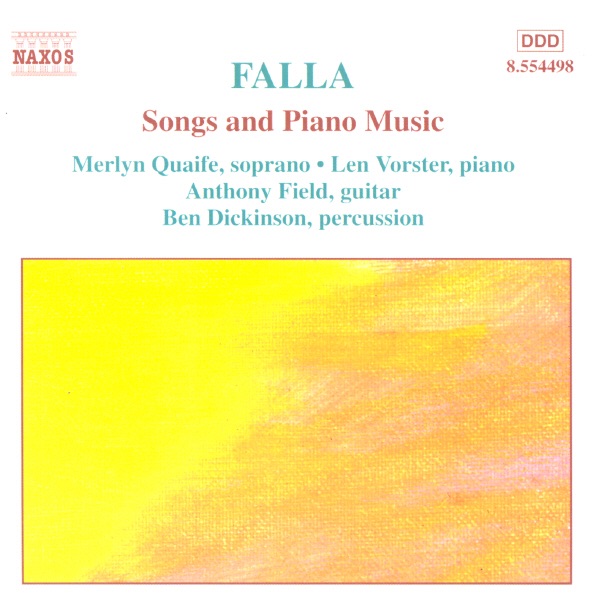
Featured Album
Works Info
Composer:Manuel de FallaGenre:VocalStyle:SongCompose Date:1915Average_duration:1:16"El pan de Ronda, G. 47" is a piano piece composed by Manuel de Falla in 1905. It was premiered in Madrid on December 12, 1905, by the composer himself. The piece is divided into three movements, each with its own unique characteristics. The first movement, "Panaderos," is a lively and rhythmic piece that captures the bustling energy of a bakery. The music is characterized by its use of syncopation and staccato notes, which create a sense of urgency and excitement. The melody is playful and catchy, with a distinct Andalusian flavor. The second movement, "Seguidillas," is a slower and more contemplative piece. The melody is haunting and melancholic, with a sense of longing and nostalgia. The music is characterized by its use of arpeggios and tremolos, which create a sense of fluidity and movement. The piece is reminiscent of traditional Spanish folk music, with its use of modal harmonies and melodic ornamentation. The third movement, "Fandango," is a lively and energetic piece that captures the spirit of the traditional Spanish dance. The music is characterized by its use of rapid arpeggios and syncopated rhythms, which create a sense of excitement and movement. The melody is playful and catchy, with a distinct Andalusian flavor. Overall, "El pan de Ronda, G. 47" is a masterful example of Manuel de Falla's unique style, which blends traditional Spanish folk music with modernist techniques. The piece is characterized by its use of rhythmic complexity, modal harmonies, and melodic ornamentation, which create a sense of depth and richness. It is a testament to Falla's skill as a composer and his ability to capture the essence of Spanish culture in his music.More....
Works Music
Released Music


Featured Music