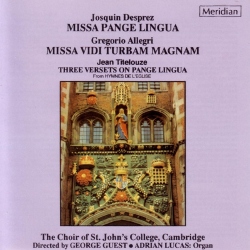
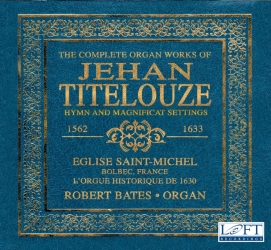
Jehan Titelouze
Versets (3) on "Pange Lingua"
Released Album
Recent Album
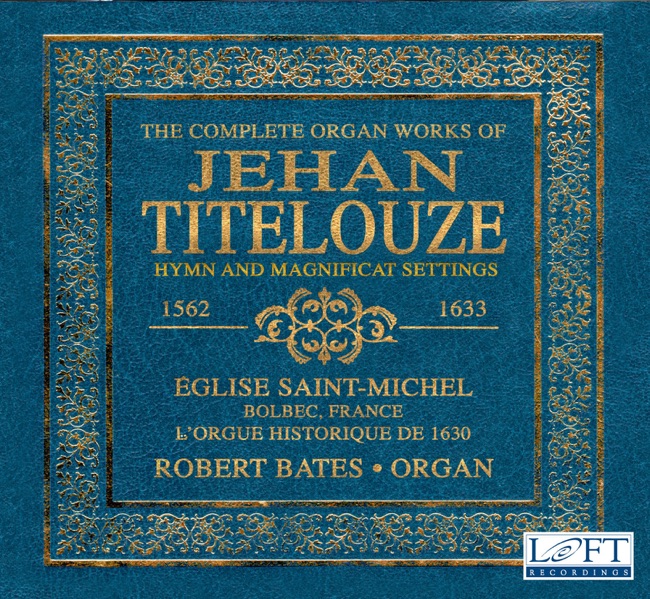
Featured Album
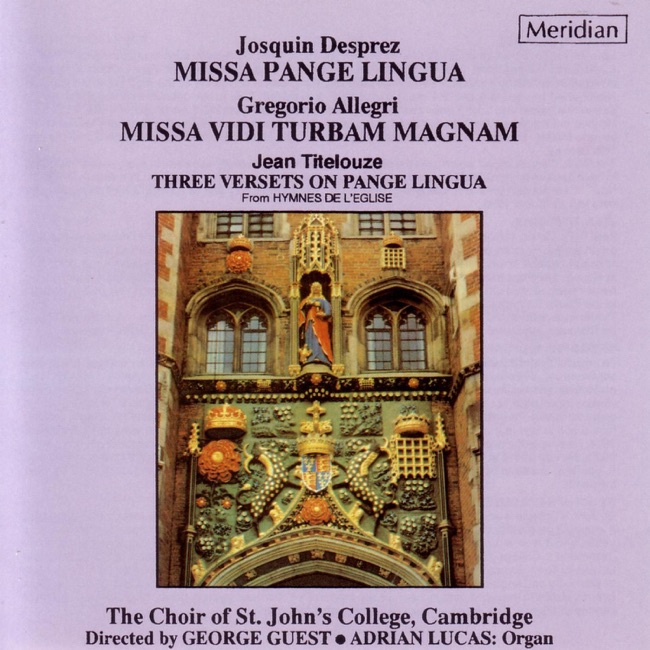
Works Info
Composer:Jehan TitelouzeGenre:KeyboardStyle:KeyboardAverage_duration:9:19Jehan Titelouze was a French composer and organist who lived from 1563 to 1633. He is considered one of the most important composers of the French Baroque era, and his works for the organ are particularly notable. One of his most famous compositions is the "Versets (3) on Pange Lingua," which was composed in the early 17th century. The "Versets (3) on Pange Lingua" is a set of three organ pieces that are based on the hymn "Pange Lingua Gloriosi Corporis Mysterium." This hymn is traditionally sung during the Catholic liturgy on Holy Thursday, and it is a hymn of praise to the Eucharist. Titelouze's "Versets" are intended to be played during the liturgy as well, and they are designed to enhance the text and meaning of the hymn. The "Versets (3) on Pange Lingua" was likely composed in the early 1600s, although the exact date is not known. It was first performed in the Cathedral of Rouen, where Titelouze was the organist. The piece was well-received, and it quickly became popular throughout France. The "Versets (3) on Pange Lingua" is divided into three movements, each of which is based on a different section of the hymn. The first movement is a prelude, which sets the tone for the piece and introduces the main themes. The second movement is a fugue, which is based on the section of the hymn that describes the Last Supper. The fugue is complex and intricate, with multiple voices weaving in and out of each other. The third movement is a toccata, which is based on the final section of the hymn. The toccata is fast and lively, with a joyful and celebratory tone. One of the characteristics of the "Versets (3) on Pange Lingua" is its use of counterpoint. Titelouze was a master of counterpoint, and he uses it extensively throughout the piece. The counterpoint creates a rich and complex texture, with multiple voices interweaving and complementing each other. Another characteristic of the piece is its use of ornamentation. Titelouze was known for his use of ornamentation in his organ works, and the "Versets" are no exception. The ornamentation adds a sense of elegance and refinement to the piece, and it helps to highlight the beauty of the hymn. Overall, the "Versets (3) on Pange Lingua" is a beautiful and complex piece of music that showcases Titelouze's skill as a composer and organist. Its use of counterpoint and ornamentation make it a masterpiece of the French Baroque era, and its connection to the Catholic liturgy gives it a spiritual and emotional depth.More....
Works Music
Released Music
Featured Music