Johann Pachelbel
Chorale Prelude "Komm Gott Schöpfer, heiliger Geist", T. 50
Released Album
Recent Album
Works Info
Composer:Johann PachelbelGenre:KeyboardStyle:Chorale PreludeCompose Date:before Apr 1706Publication Date:1903Average_duration:2:31Johann Pachelbel's 'Chorale Prelude Komm Gott Schöpfer, heiliger Geist, T. 50' is a sacred organ composition that was composed in the late 17th century. The piece is based on the Lutheran hymn of the same name, which translates to "Come, God Creator, Holy Ghost." Pachelbel's prelude is one of many chorale preludes that he composed throughout his career, and it is considered to be one of his most famous works. The piece is divided into four movements, each of which is based on a different verse of the hymn. The first movement is a simple and straightforward setting of the first verse of the hymn. The second movement is more complex, with a faster tempo and more intricate harmonies. The third movement is a slower and more contemplative setting of the third verse of the hymn, while the fourth movement is a lively and joyful setting of the final verse. One of the most notable characteristics of Pachelbel's 'Chorale Prelude Komm Gott Schöpfer, heiliger Geist, T. 50' is its use of counterpoint. Pachelbel was a master of counterpoint, and he uses it extensively throughout the piece to create complex and intricate harmonies. The piece also features a number of virtuosic passages for the organist, particularly in the second and fourth movements. The 'Chorale Prelude Komm Gott Schöpfer, heiliger Geist, T. 50' was likely composed in the late 1680s or early 1690s, during Pachelbel's time as the organist at the Predigerkirche in Erfurt, Germany. The piece was likely premiered at the Predigerkirche, where Pachelbel would have had the opportunity to perform his own compositions for the congregation. Overall, Pachelbel's 'Chorale Prelude Komm Gott Schöpfer, heiliger Geist, T. 50' is a beautiful and complex work that showcases the composer's mastery of counterpoint and his skill as an organist. Its use of the Lutheran hymn as its basis also reflects Pachelbel's deep religious faith and his commitment to creating music that would inspire and uplift his listeners.More....
Works Music
Released Music
1
Chorale Prelude "Come God Creator, Holy Spirit", m. 50
Komm, Gott Schöpfer, Heiliger Geist (17), anonym überliefert [T. 50]
2:29
3
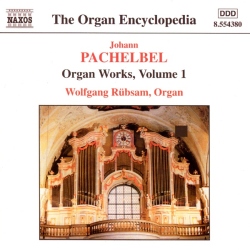
2:35
4
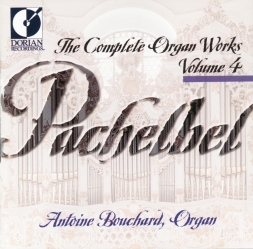
2:30
5
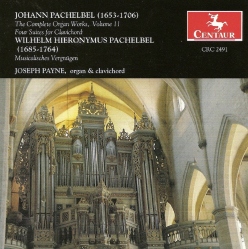
2:12