Jean Roger-Ducasse
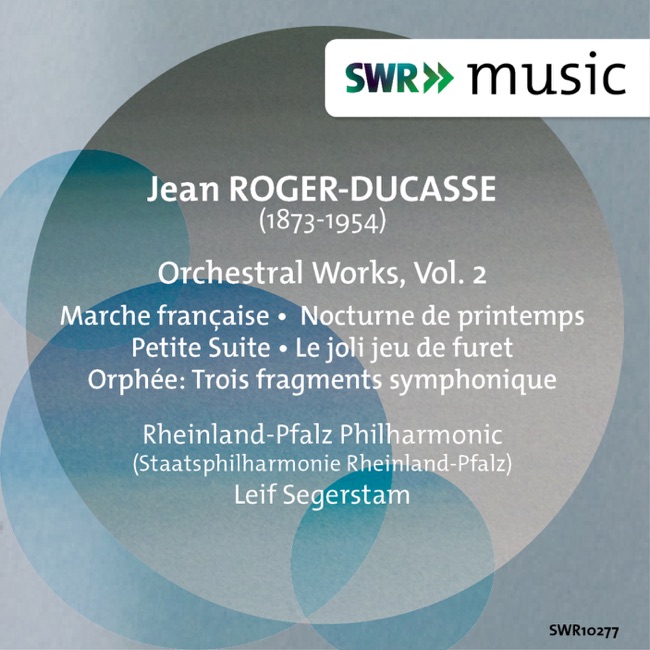
Orphée, mimodrame lyrique: Symphonic Fragments (3)
Released Album
Recent Album

Works Info
Composer:Jean Roger-DucasseGenre:OrchestralStyle:OrchestralAverage_duration:25:06Movement_count:3Movement ....Orphée, mimodrame lyrique: Symphonic Fragments (3) is a composition by French composer Jean Roger-Ducasse. It was composed in 1913 and premiered on May 22, 1914, at the Salle Pleyel in Paris. The piece is a suite of three movements, each of which is based on a different scene from the mimodrame lyrique Orphée. The first movement, titled "La Mort d'Eurydice," is a somber and mournful piece that captures the moment when Orpheus loses his beloved Eurydice. The music is slow and melancholic, with a sense of longing and sadness that is conveyed through the use of minor keys and dissonant harmonies. The second movement, "La Danse des Furies," is a frenzied and chaotic piece that depicts the scene where Orpheus is pursued by the Furies. The music is fast-paced and dissonant, with jagged rhythms and sudden shifts in dynamics that create a sense of urgency and danger. The final movement, "La Chanson d'Orphée," is a lyrical and romantic piece that captures the moment when Orpheus sings his way into the underworld to retrieve Eurydice. The music is gentle and flowing, with a sense of tenderness and beauty that is conveyed through the use of lush harmonies and soaring melodies. Overall, Orphée, mimodrame lyrique: Symphonic Fragments (3) is a powerful and evocative piece of music that captures the drama and emotion of the original mimodrame lyrique. Through its use of rich harmonies, expressive melodies, and dynamic contrasts, the piece brings to life the story of Orpheus and Eurydice in a way that is both moving and unforgettable.More....
Works Music
Released Music