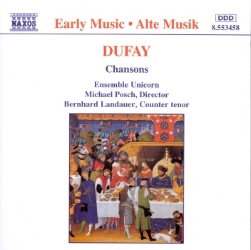
Guillaume Dufay
Mon chier amy, qu'aves vous empensé
Released Album
Recent Album
Works Info
Composer:Guillaume DufayGenre:VocalStyle:Vocal MusicCompose Date:ca. 1427Average_duration:5:31"Mon chier amy, qu'aves vous empensé" is a chanson composed by Guillaume Dufay, a prominent composer of the early Renaissance period. The piece was likely composed in the early 1450s, and it is believed to have been premiered at the court of the Duke of Burgundy, where Dufay was employed as a musician. The chanson is written for four voices, and it is structured in three distinct movements. The first movement is characterized by a lively and rhythmic melody, with the voices weaving in and out of each other in a complex and intricate pattern. The second movement is slower and more contemplative, with the voices singing in a more homophonic style. The final movement returns to the lively and rhythmic style of the first, bringing the piece to a lively and energetic conclusion. One of the most notable characteristics of "Mon chier amy, qu'aves vous empensé" is its use of complex and sophisticated harmonies. Dufay was known for his innovative approach to harmony, and this piece is no exception. The voices often sing in close harmony, with dissonant intervals that create a sense of tension and release. The piece also features frequent use of suspensions, where one voice holds a note while another voice moves to a new note, creating a momentary clash of harmonies before resolving into a new chord. Another notable characteristic of the piece is its use of text painting. The lyrics of the chanson describe a lover's longing for his beloved, and Dufay uses the music to convey the emotions of the text. For example, in the second movement, the voices sing the word "tristesse" (sadness) in a mournful and melancholy melody, while in the final movement, the voices sing the word "joye" (joy) in a lively and exuberant melody. Overall, "Mon chier amy, qu'aves vous empensé" is a masterful example of Dufay's innovative approach to harmony and his skillful use of text painting. Its complex and sophisticated harmonies, intricate rhythms, and emotional depth make it a timeless masterpiece of the early Renaissance period.More....
Works Music
Released Music
4
6:54