Alfonso X (el Sabio)
Cantiga de Santa María 295, Que por al non devess' om' a Santa María servir
Released Album
Featured Album
Works Info
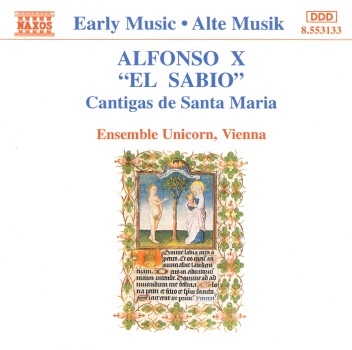
Composer:Alfonso X (el Sabio)Genre:VocalStyle:Vocal MusicAverage_duration:5:27The Cantiga de Santa María 295, Que por al non devess' om' a Santa María servir', was composed by Alfonso X (el Sabio) in the 13th century. It is a part of a collection of 420 songs known as the Cantigas de Santa María, which were written in Galician-Portuguese and dedicated to the Virgin Mary. The Cantigas de Santa María are considered one of the most important collections of medieval music. The Cantiga de Santa María 295 is a monophonic song that tells the story of a man who did not serve the Virgin Mary and suffered the consequences. The song is divided into three movements, each with its own melody and rhythm. The first movement is in a lively 6/8 time signature and sets the scene for the story. The second movement is slower and more contemplative, with a 4/4 time signature. The third movement returns to the lively 6/8 time signature and concludes the story. The Cantiga de Santa María 295 is characterized by its simple melody and repetitive structure. The melody is based on a series of short phrases that are repeated throughout the song. The lyrics are in Galician-Portuguese and are written in a simple, straightforward style. The song is accompanied by a variety of instruments, including the vielle, the lute, and the percussion instrument known as the tambourine. The Cantigas de Santa María were composed during a time of great cultural and artistic flourishing in Spain. Alfonso X was a patron of the arts and sciences, and his court was a center of learning and creativity. The Cantigas de Santa María are a testament to this cultural richness, and they continue to be studied and performed today. In conclusion, the Cantiga de Santa María 295, Que por al non devess' om' a Santa María servir', is a beautiful and simple song that tells a powerful story. Its repetitive structure and simple melody make it easy to remember and sing, and its message of devotion to the Virgin Mary is timeless. As a part of the Cantigas de Santa María, it is a valuable piece of medieval music and a testament to the cultural richness of 13th-century Spain.More....
Works Music