Antonio Vivaldi
Sonata for flute & continuo in D minor, RV 49
Released Album
Recent Album
Works Info
Composer:Antonio VivaldiGenre:ChamberStyle:SonataCompose Date:before 1750Average_duration:7:39Movement_count:4Movement ....Antonio Vivaldi's Sonata for flute & continuo in D minor, RV 49, is a Baroque-era composition that was likely composed in the early 18th century. The piece is believed to have been premiered in Venice, Italy, where Vivaldi spent much of his career as a composer and conductor. The sonata is comprised of three movements: an opening "Largo," a lively "Allegro," and a final "Largo" that serves as a kind of recapitulation of the first movement. The piece is scored for flute and continuo, which typically includes a harpsichord or other keyboard instrument, as well as a bass instrument such as a cello or bassoon. One of the defining characteristics of Vivaldi's Sonata for flute & continuo in D minor is its use of the ritornello form, which was a common structure in Baroque music. This form involves the repetition of a recurring theme or melody, which is interspersed with contrasting sections that showcase the soloist's virtuosity and technical skill. In the first movement, the flute and continuo engage in a dialogue that alternates between the ritornello theme and more elaborate solo passages. The second movement is a lively dance that features intricate ornamentation and rapid runs, while the final movement returns to the slower tempo and lyrical melodies of the opening. Overall, Vivaldi's Sonata for flute & continuo in D minor is a prime example of the composer's skill in crafting intricate and engaging works for soloists and small ensembles. Its use of the ritornello form and virtuosic solo passages make it a popular choice for flutists and Baroque music enthusiasts alike.More....
Works Music
Released Music
4
2:44
5
2:1
6
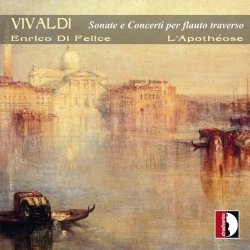
1:35
7
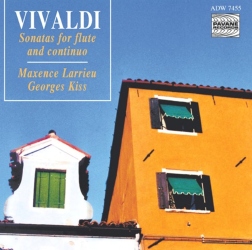
1:59