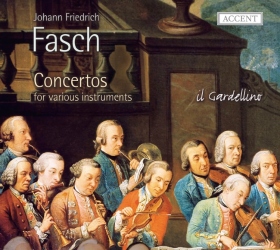
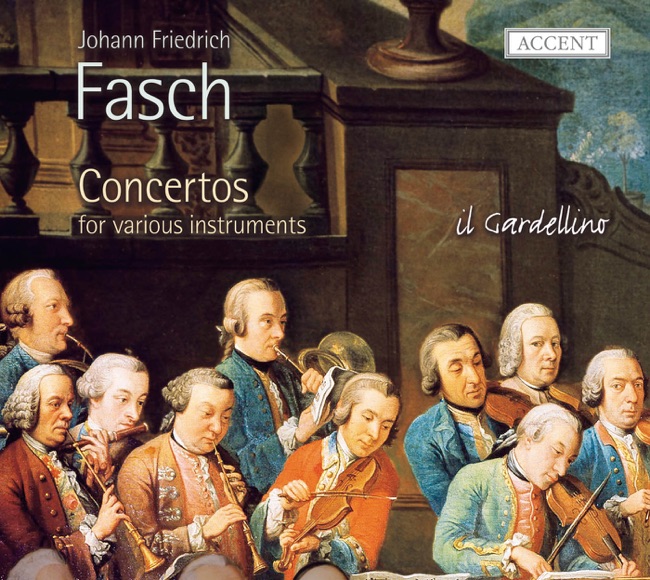
Johann Friedrich Fasch
Concerto for 2 flutes, strings & b.c. in D major, FaWV L:D9
Released Album
Recent Album
Works Info
Composer:Johann Friedrich FaschGenre:ConcertoAverage_duration:12:02Movement_count:3Movement ....Johann Friedrich Fasch's Concerto for 2 flutes, strings & b.c. in D major, FaWV L:D9, was composed in the early 18th century. The exact date of composition is unknown, but it is believed to have been written between 1715 and 1720. The concerto was premiered in the court of Zerbst, where Fasch was employed as a Kapellmeister. The concerto consists of three movements: Allegro, Largo, and Allegro. The first movement is in a fast tempo and features lively interplay between the two flutes and the string orchestra. The second movement is a slow and lyrical adagio, with the flutes taking turns to play the melody. The final movement is another fast and energetic allegro, with the flutes engaging in playful dialogue with each other and the orchestra. One of the characteristics of Fasch's concerto is its use of counterpoint, which is the interweaving of multiple melodic lines. This is particularly evident in the first and third movements, where the flutes and strings engage in intricate and complex interplay. Another characteristic of the concerto is its use of ornamentation, which was a common feature of Baroque music. The flutes are often embellished with trills, turns, and other decorative flourishes, adding to the virtuosic nature of the piece. Overall, Fasch's Concerto for 2 flutes, strings & b.c. in D major, FaWV L:D9, is a lively and engaging work that showcases the composer's skill in writing for the flute. Its use of counterpoint and ornamentation, combined with its energetic and playful character, make it a popular choice for performers and audiences alike.More....
Works Music
Released Music