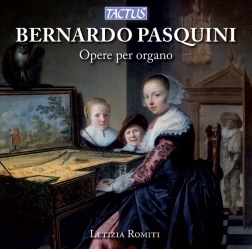
Bernardo Pasquini
Ricercare for organ
Released Album
Recent Album
Works Info
Composer:Bernardo PasquiniGenre:KeyboardStyle:RicercarAverage_duration:5:52Bernardo Pasquini was an Italian composer, harpsichordist, and organist of the Baroque era. He was born in 1637 in Massa e Cozzile, Tuscany, and died in 1710 in Rome. Pasquini was a prolific composer, and his works include operas, cantatas, oratorios, and instrumental music. One of his most famous works is the Ricercare for organ. The Ricercare for organ was composed by Pasquini in the late 17th century. The exact date of composition is unknown, but it is believed to have been written around 1680. The piece is a single movement work for solo organ, and it is written in the style of a ricercare, which is a type of fugue. The Ricercare for organ is characterized by its contrapuntal texture and its use of imitative polyphony. The piece begins with a simple theme that is introduced by the right hand of the organist. This theme is then imitated by the left hand, and the two parts continue to play off of each other in a complex web of counterpoint. The piece builds in intensity as more voices are added, and the organist is required to navigate a series of intricate and challenging passages. The Ricercare for organ is a virtuosic work that showcases the technical abilities of the organist. It requires a high level of skill and precision, as well as an understanding of the complex contrapuntal techniques used by Pasquini. The piece is also notable for its use of chromaticism, which adds a sense of tension and drama to the music. The Ricercare for organ was premiered in Rome, where Pasquini was a prominent musician at the time. It quickly became popular among organists and was widely performed throughout Europe. Today, it is still considered a masterpiece of Baroque organ music and is frequently performed and recorded. In conclusion, the Ricercare for organ is a single movement work for solo organ composed by Bernardo Pasquini in the late 17th century. It is characterized by its contrapuntal texture, use of imitative polyphony, and virtuosic demands on the organist. The piece was premiered in Rome and quickly became popular throughout Europe, and it is still considered a masterpiece of Baroque organ music today.More....
Works Music
Released Music