Sofia Gubaidulina
String Quartet No. 1
Released Album
Recent Album
Featured Album
Works Info
Composer:Sofia GubaidulinaGenre:ChamberStyle:QuartetCompose Date:1971Average_duration:22:56Sofia Gubaidulina's String Quartet No. 1 was composed in 1971 and premiered in Moscow the same year. The piece is divided into four movements, each with its own distinct character and musical language. The first movement, titled "Reflections on the Theme B-A-C-H," is a tribute to Johann Sebastian Bach. The movement begins with a series of pizzicato notes that gradually build in intensity, leading to a frenzied section featuring rapid arpeggios and glissandos. The movement then transitions into a slower, more contemplative section, with the cello playing a mournful melody over sustained chords in the other instruments. The movement ends with a return to the frenzied opening material. The second movement, "The Lyre of Orpheus," is inspired by the Greek myth of Orpheus, who played his lyre to charm the gods and rescue his wife from the underworld. The movement begins with a haunting melody in the cello, accompanied by ethereal harmonics in the other instruments. The music gradually builds in intensity, with the instruments playing off each other in a complex web of counterpoint. The movement ends with a return to the opening material, with the cello once again playing the haunting melody. The third movement, "The Waves," is a depiction of the ebb and flow of the ocean. The movement begins with a series of tremolos and glissandos, evoking the sound of waves crashing against the shore. The music then transitions into a more lyrical section, with the instruments playing a flowing melody that rises and falls like the tide. The movement ends with a return to the opening material, with the instruments once again playing tremolos and glissandos. The final movement, "The Prayer," is a meditation on the nature of prayer. The movement begins with a series of quiet, sustained chords, with the instruments gradually building in intensity. The music then transitions into a more rhythmic section, with the instruments playing off each other in a complex web of counterpoint. The movement ends with a return to the opening material, with the instruments once again playing quiet, sustained chords. Overall, Gubaidulina's String Quartet No. 1 is a complex and deeply expressive work, showcasing the composer's mastery of both traditional and avant-garde musical techniques. The piece is characterized by its use of complex rhythms, intricate counterpoint, and a wide range of extended techniques, including glissandos, harmonics, and pizzicato. Despite its complexity, however, the piece is also deeply emotional and expressive, with each movement exploring a different aspect of the human experience.More....
Works Music
Released Music
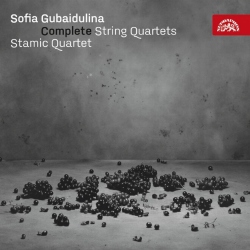
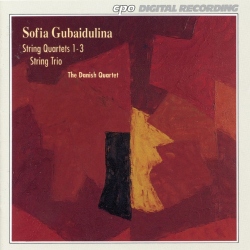
Featured Music