


Miklós Rózsa
Variations on a Hungarian Peasant Song, Op. 4
Released Album
Recent Album
Works Info
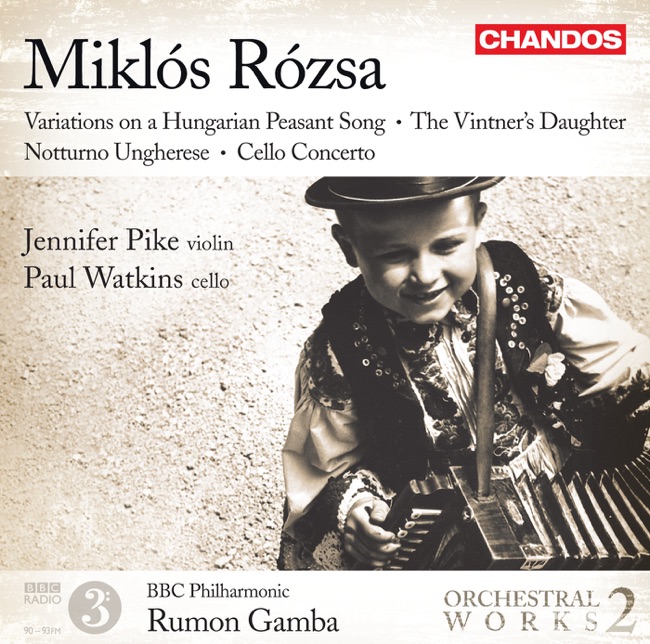
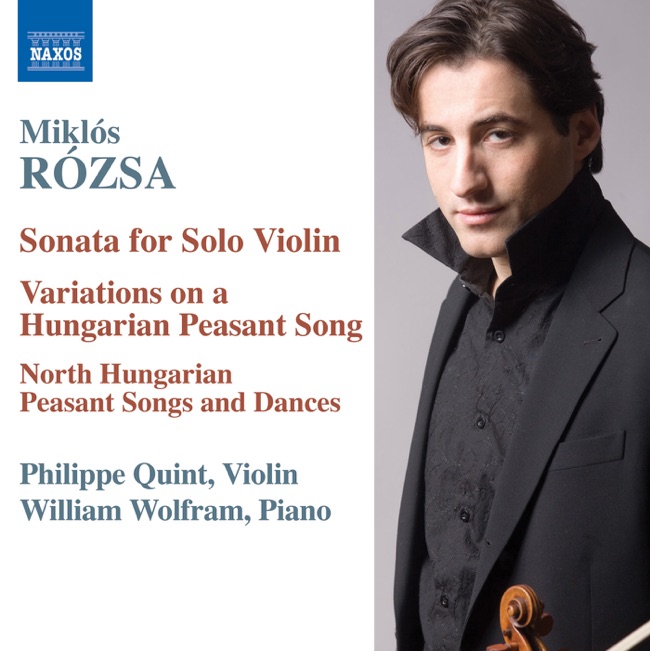
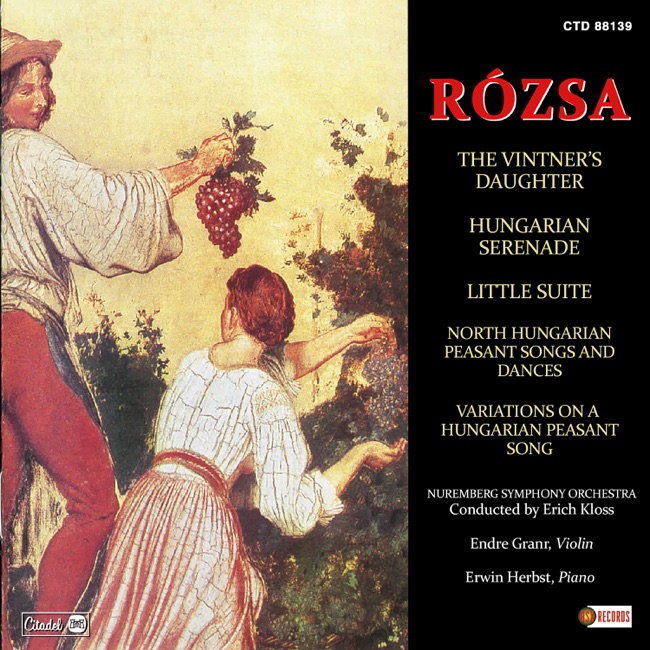
Composer:Miklós RózsaGenre:ConcertoStyle:ConcertoCompose Date:1929Average_duration:9:32Miklós Rózsa's 'Variations on a Hungarian Peasant Song, Op. 4' is a composition for orchestra that was composed in 1929. The piece premiered on January 17, 1930, in Budapest, Hungary, with the composer conducting the Budapest Philharmonic Orchestra. The composition consists of a theme and eight variations, with a coda that brings the piece to a close. The theme is a traditional Hungarian folk song, which Rózsa heard as a child and later transcribed. The variations are based on the melody of the theme, but each variation is distinct in its character and mood. The first variation is a lively and playful dance, while the second variation is more subdued and introspective. The third variation is a fast and virtuosic display of technical skill, while the fourth variation is a slow and melancholic lament. The fifth variation is a lively and rhythmic dance, while the sixth variation is a gentle and lyrical melody. The seventh variation is a fast and energetic dance, while the eighth variation is a grand and majestic finale. Throughout the piece, Rózsa employs a variety of orchestral colors and textures, using different instruments and combinations of instruments to create a rich and varied sound. He also incorporates elements of Hungarian folk music, such as the use of the cimbalom, a traditional Hungarian instrument similar to a hammered dulcimer. Overall, 'Variations on a Hungarian Peasant Song, Op. 4' is a masterful display of Rózsa's compositional skill and his deep connection to his Hungarian heritage. The piece is both a tribute to the rich tradition of Hungarian folk music and a testament to Rózsa's own creative vision and musical genius.More....
Works Music
Released Music
1
10:11
2
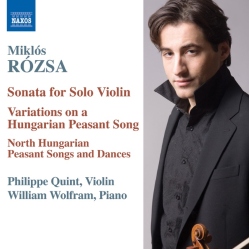
9:33
3
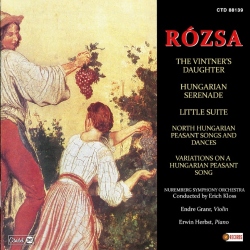
9:6