Carlo Gesualdo
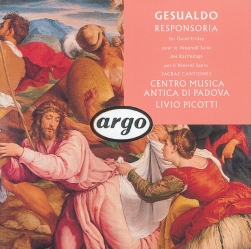
Responsories (9) for Good Friday
Released Album
Recent Album
Featured Album
Works Info
Composer:Carlo GesualdoGenre:ChoralStyle:CollectionCompose Date:1611Average_duration:37:55Movement_count:9Movement ....Carlo Gesualdo, Prince of Venosa, was an Italian composer of the late Renaissance period. He is known for his highly expressive and chromatic music, which was ahead of its time and anticipated many features of Baroque music. One of his most famous works is the Responsories (9) for Good Friday, a cycle of nine pieces for five voices. The Responsories were composed in 1611, towards the end of Gesualdo's life. They were intended to be performed during the Tenebrae service on Good Friday, a solemn liturgy that commemorates the crucifixion of Jesus Christ. The Tenebrae service consists of the gradual extinguishing of candles, symbolizing the darkness that fell upon the earth at the time of Christ's death. The Responsories are structured in three sets of three pieces each, corresponding to the three nocturnes of the Tenebrae service. Each piece is a setting of a text from the Lamentations of Jeremiah, a book of the Old Testament that describes the destruction of Jerusalem and the exile of the Jewish people. The texts are sung in Latin and are highly emotional, expressing grief, despair, and hope. Gesualdo's music for the Responsories is characterized by its intense chromaticism, which creates a sense of tension and instability. The vocal lines are often dissonant and unpredictable, with sudden shifts in harmony and rhythm. The music is also highly expressive, with frequent use of word-painting and dramatic contrasts of dynamics and texture. Despite its avant-garde features, Gesualdo's music for the Responsories is deeply rooted in the tradition of Renaissance polyphony. The vocal parts are carefully balanced and interwoven, creating a rich and complex texture. The music also makes use of traditional techniques such as imitation, canon, and homophony. The Responsories for Good Friday were first performed in Gesualdo's private chapel in Naples, where he lived as a recluse. They were later published in 1611, along with other works by the composer. Today, they are considered one of the masterpieces of Renaissance music, and are still performed and recorded by choirs around the world.More....
Works Music
Released Music
2
Responses (9) for Good Friday
Nocturnus 2. 5. Tenebrae factae sunt, dum crucifixissent Jesum Judaei
4:9
Featured Music