Kurt Weill
Ballad of the Magna Carta
Released Album
Recent Album
Works Info
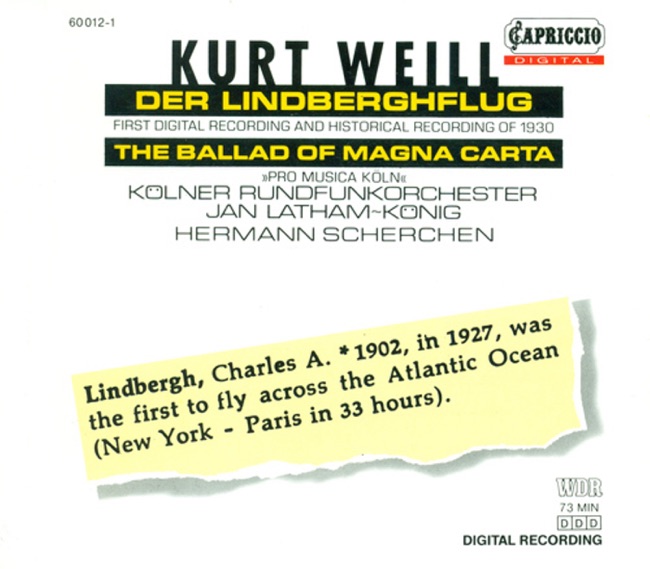
Composer:Kurt WeillGenre:ChoralStyle:CantataCompose Date:Jan 1939Publication Date:1940First Performance:Feb 4, 1940Average_duration:15:34Kurt Weill's "Ballad of the Magna Carta" is a choral work that was composed in 1937. It premiered on June 15, 1937, at the New York World's Fair as part of the "Pageant of the States" celebration. The work is divided into three movements, each with its own distinct characteristics. The first movement, "The Barons' Revolt," is a lively and energetic piece that sets the scene for the Magna Carta's creation. The music is characterized by a driving rhythm and a sense of urgency, reflecting the rebellious spirit of the barons who demanded greater rights and freedoms from King John. The second movement, "The Charter," is a more contemplative piece that reflects the solemnity of the Magna Carta's signing. The music is slower and more measured, with a sense of gravitas that befits the importance of the document. The choir sings the text of the Magna Carta itself, emphasizing the key phrases and ideas that have made it such an enduring symbol of liberty and justice. The final movement, "The Legacy," is a triumphant piece that celebrates the lasting impact of the Magna Carta on the world. The music is grand and majestic, with soaring melodies and rich harmonies that evoke a sense of awe and wonder. The choir sings of the Magna Carta's influence on the development of democracy and human rights, and the music builds to a powerful climax that leaves a lasting impression on the listener. Overall, "Ballad of the Magna Carta" is a powerful and moving work that captures the spirit of one of the most important documents in human history. Weill's music is both evocative and inspiring, and the choir's performance brings the text of the Magna Carta to life in a way that is both accessible and profound.More....
Works Music