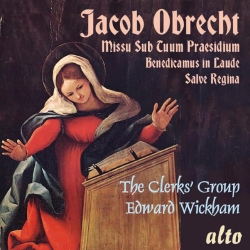
Jacob Obrecht
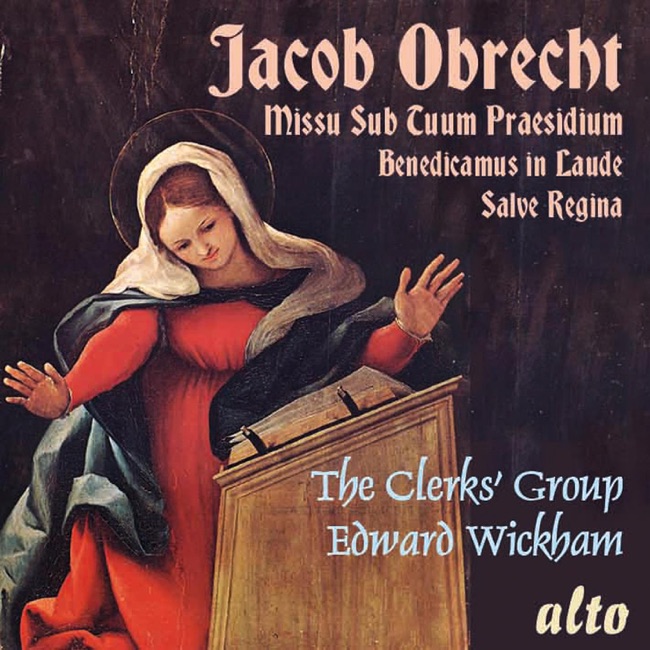
Benedicamus in laude
Released Album
Recent Album
Works Info
Composer:Jacob ObrechtGenre:ChoralStyle:ChoralAverage_duration:1:16Jacob Obrecht was a prominent composer of the Renaissance period, known for his sacred music compositions. One of his most famous works is the motet "Benedicamus in laude," which was composed in the late 15th century. The motet "Benedicamus in laude" is a four-part composition that was written for the Catholic Church. It is believed to have been composed in the year 1487, during Obrecht's time as a choir master at the Cathedral of Cambrai in France. The piece was likely written for the Feast of the Holy Trinity, which is celebrated on the Sunday after Pentecost. The motet is divided into three movements, each with its own distinct character. The first movement is a joyful and celebratory section that features a lively melody and intricate harmonies. The second movement is more subdued and contemplative, with a slower tempo and more somber tone. The final movement returns to the joyful and celebratory character of the first movement, with a lively and energetic melody that builds to a triumphant conclusion. One of the most notable characteristics of "Benedicamus in laude" is its use of polyphony, which is a technique that involves multiple independent melodies being played or sung simultaneously. Obrecht was known for his skillful use of polyphony, and this piece is a prime example of his mastery of the technique. The four-part composition features intricate harmonies and counterpoint, with each voice contributing to the overall texture of the piece. Another characteristic of the motet is its use of Latin text. The lyrics of "Benedicamus in laude" are taken from the Catholic liturgy and are a hymn of praise to God. The text is sung in a call-and-response style, with the choir alternating between the main melody and a repeated refrain of "Benedicamus Domino" (Let us bless the Lord). Overall, "Benedicamus in laude" is a beautiful and complex composition that showcases Obrecht's skill as a composer. Its use of polyphony, Latin text, and distinct movements make it a standout piece of Renaissance sacred music.More....
Works Music