


Antonio Vivaldi
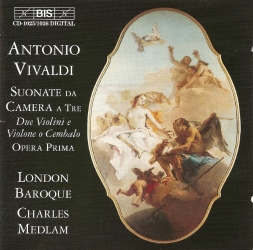
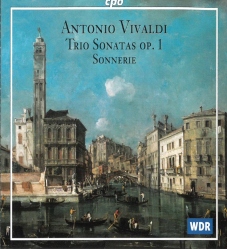
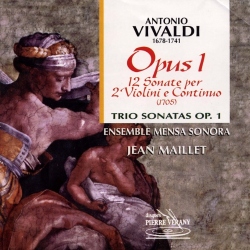
Trio Sonata for 2 violins & continuo in D major, Op. 1/6, RV 62
Released Album
Recent Album
Works Info
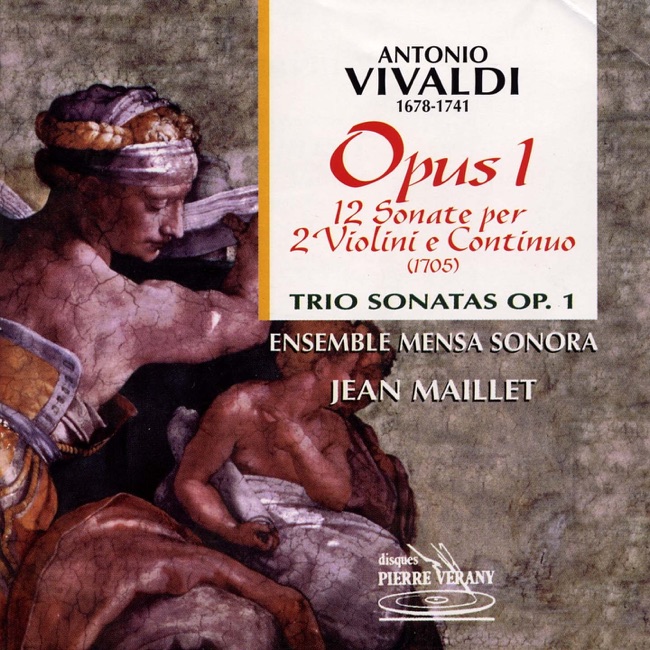
Composer:Antonio VivaldiGenre:ChamberStyle:Sonata: Trio SonataCompose Date:1705Publication Date:1705Average_duration:7:09Movement_count:4Movement ....Antonio Vivaldi's Trio Sonata for 2 violins & continuo in D major, Op. 1/6, RV 62, was composed in the early 18th century and premiered in Venice, Italy. The piece is part of Vivaldi's Opus 1 collection, which consists of twelve trio sonatas for various instruments. The Trio Sonata in D major is comprised of four movements: Allegro, Largo, Allegro, and Allegro. The first movement is a lively and energetic Allegro, featuring virtuosic violin passages and a driving bass line. The second movement, Largo, is a slow and expressive adagio, with the two violins weaving together in a beautiful duet. The third movement, Allegro, returns to the fast and lively tempo of the first movement, with intricate counterpoint and playful melodies. The final movement, also an Allegro, is a lively and joyful conclusion to the piece, with the two violins trading off virtuosic passages and the continuo providing a solid foundation. One of the defining characteristics of Vivaldi's Trio Sonata in D major is its use of the continuo, which provides a harmonic and rhythmic foundation for the two violins. The continuo part is typically played on a harpsichord or organ, and consists of a bass line and chord symbols, allowing the performer to improvise the accompaniment. This improvisational element adds to the spontaneity and liveliness of the piece. Another characteristic of Vivaldi's Trio Sonata in D major is its use of virtuosic violin passages, which showcase the technical abilities of the performers. The two violins often play in unison or in close harmony, creating a rich and full sound. The use of counterpoint, or the interweaving of multiple melodic lines, is also a prominent feature of the piece. Overall, Vivaldi's Trio Sonata for 2 violins & continuo in D major, Op. 1/6, RV 62, is a lively and expressive work that showcases the composer's skill in writing for multiple instruments. Its use of the continuo and virtuosic violin passages make it a quintessential example of Baroque chamber music.More....
Works Music
Released Music
1
1:33
6
1:56
7
1:11
8
1:16
9
1:56
10
1:37