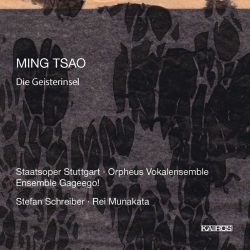
Ming Tsao
Serenade
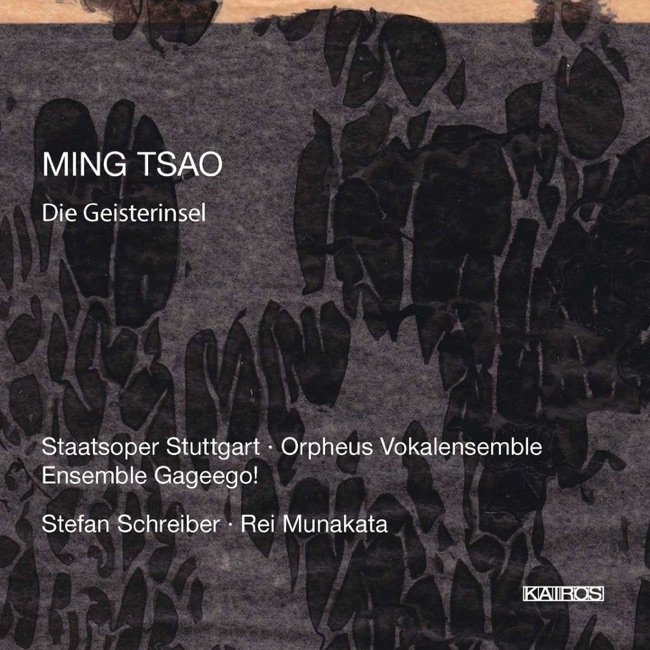
Works Info
Composer:Ming TsaoGenre:VocalCompose Date:2012Average_duration:12:30Serenade is a contemporary classical composition by Taiwanese-American composer Ming Tsao. The piece was composed in 2005 and premiered on March 4, 2006, by the New York Youth Symphony at Carnegie Hall in New York City. The composition consists of three movements, each with its own distinct character and mood. The first movement, marked "Allegro," is lively and energetic, featuring intricate rhythms and playful melodies. The second movement, marked "Adagio," is slower and more contemplative, with a hauntingly beautiful melody that builds to a powerful climax. The final movement, marked "Allegro con brio," is fast-paced and exciting, with a driving rhythm and virtuosic solo passages. One of the most striking characteristics of Serenade is its use of unconventional instrumentation. The piece is scored for a chamber orchestra consisting of flute, oboe, clarinet, bassoon, horn, trumpet, trombone, percussion, piano, and strings. However, Tsao also incorporates a variety of non-traditional instruments, including a marimba, vibraphone, and steel drum. This creates a unique and colorful sound palette that sets Serenade apart from more traditional classical compositions. Another notable aspect of Serenade is its use of musical motifs and themes. Throughout the piece, Tsao weaves together a variety of recurring melodies and rhythms, creating a sense of unity and coherence across the three movements. This gives the composition a sense of structure and purpose, while also allowing for moments of surprise and unpredictability. Overall, Serenade is a dynamic and engaging work that showcases Ming Tsao's skill as a composer. Its unconventional instrumentation, use of motifs, and varied moods make it a standout piece in the contemporary classical repertoire.More....