


Ming Tsao
Released Album
Opera
-
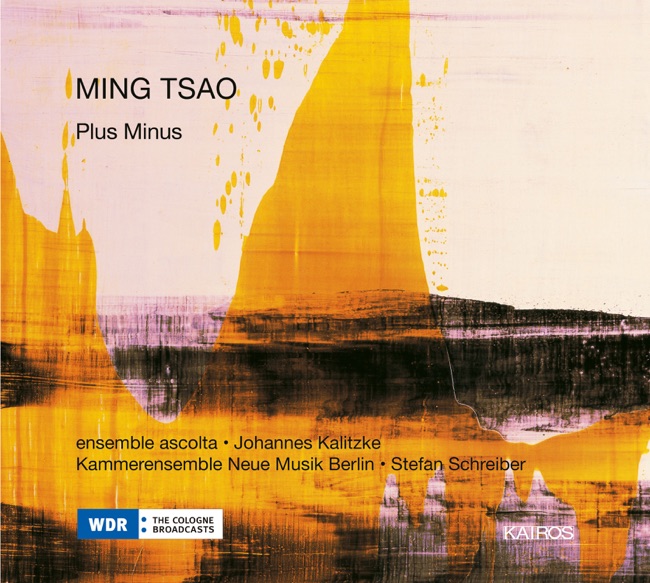 March 3, 2017
 -
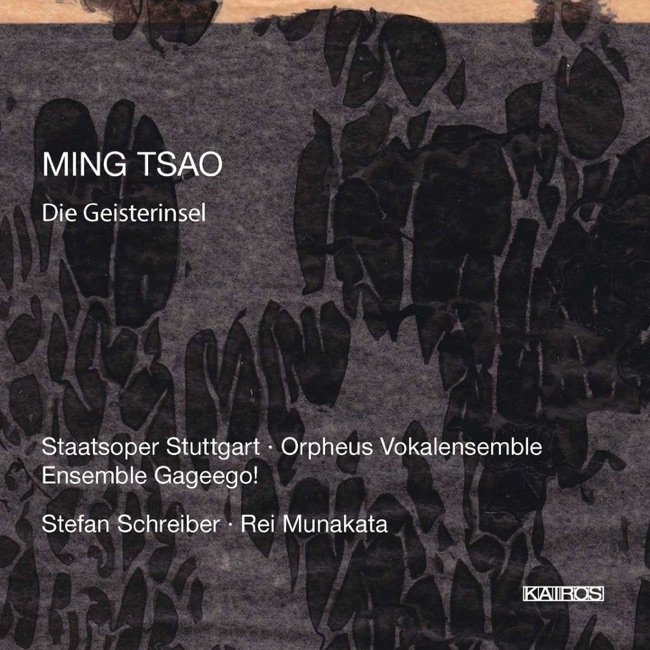 February 10, 2015
Artist Info
Role:ComposerMing Tsao was a renowned classical music composer who was born on October 10, 1956, in Taipei, Taiwan. He was the youngest of three children and grew up in a family that valued education and the arts. His father was a professor of literature, and his mother was a pianist who taught music at a local school. Tsao showed an early interest in music and began playing the piano at the age of five. He quickly showed a natural talent for the instrument and began taking lessons from his mother. By the time he was ten years old, he had already composed his first piece of music, a short piano sonata. Tsao's parents recognized his talent and encouraged him to pursue a career in music. They enrolled him in the National Taiwan Academy of Arts, where he studied composition and piano. He also studied with several renowned composers, including Chou Wen-chung and Tan Dun. After completing his studies, Tsao moved to the United States to further his education. He enrolled in the Juilliard School in New York City, where he studied with Milton Babbitt and Elliott Carter. He also studied with John Cage and Gyorgy Ligeti, two of the most influential composers of the 20th century. Tsao's early works were heavily influenced by the avant-garde music of the 1960s and 1970s. He experimented with unconventional forms and techniques, often incorporating electronic instruments and computer-generated sounds into his compositions. His early works include "Three Pieces for Piano and Electronics" and "Electronic Music for Tape." In the 1980s, Tsao began to move away from the avant-garde and towards a more traditional style of composition. He began to incorporate elements of Chinese music into his works, blending traditional Chinese instruments with Western classical instruments. His works from this period include "Concerto for Pipa and Orchestra" and "Chinese Suite for Orchestra." Tsao's music is characterized by its complexity and sophistication. He was known for his use of intricate rhythms and harmonies, as well as his ability to create rich, multi-layered textures. His works often explore themes of identity and cultural heritage, reflecting his own experiences as a Taiwanese composer living and working in the United States. One of Tsao's most famous works is "Symphony No. 1," which was commissioned by the New York Philharmonic in 1992. The piece is a complex and ambitious work that incorporates elements of both Western classical music and traditional Chinese music. It features a large orchestra, including Chinese instruments such as the pipa and erhu, and explores themes of cultural identity and the search for meaning in a rapidly changing world. Tsao continued to compose throughout the 1990s and 2000s, producing a wide range of works for orchestra, chamber ensemble, and solo instruments. His later works include "String Quartet No. 2," "Piano Concerto No. 2," and "Concerto for Violin and Orchestra." In addition to his work as a composer, Tsao was also a respected music educator. He taught at several universities, including the University of California, Berkeley, and the University of Michigan. He was known for his dedication to his students and his ability to inspire them to explore new ideas and techniques in their own compositions. Tragically, Ming Tsao passed away on December 27, 2019, at the age of 63.More....
Copyright Ⓒ 2013 Davinci Finger. All rights reseved
Service Terms & Policy