Jacobus Vaet
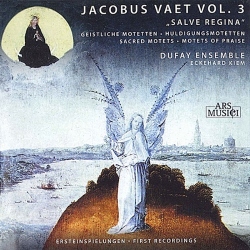
Salve Regina
Released Album
Recent Album
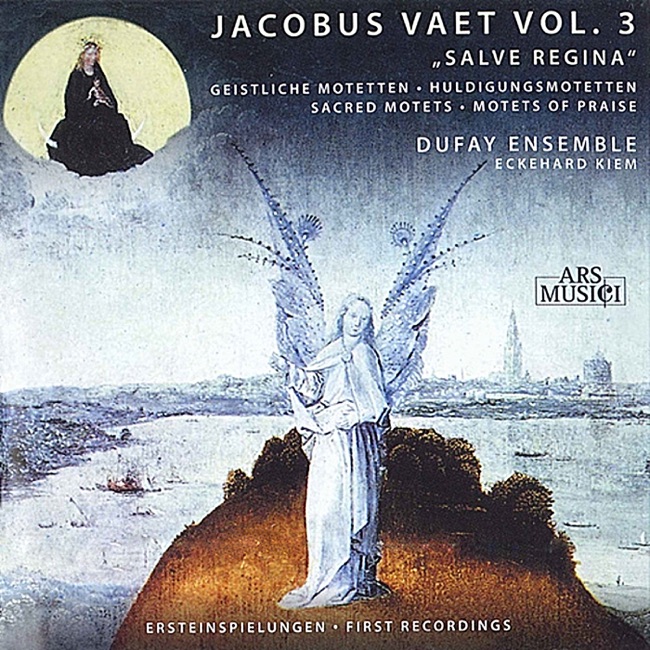
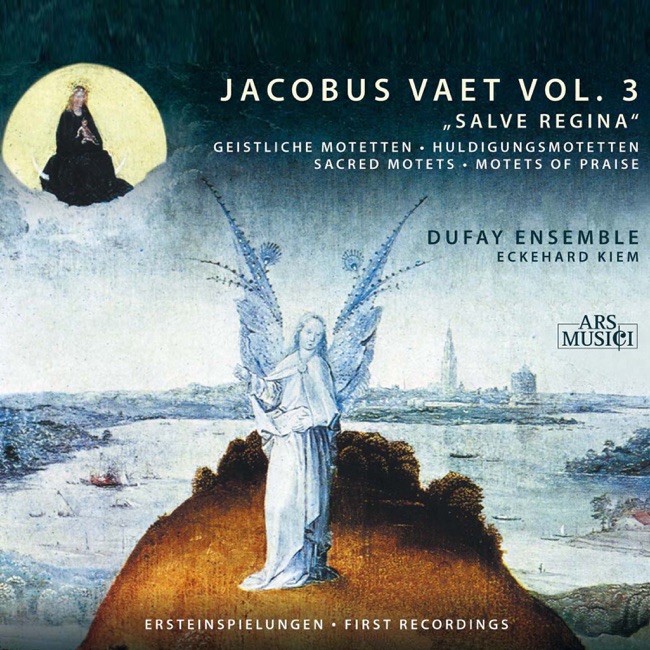
Works Info
Composer:Jacobus VaetGenre:ChoralStyle:ChoralAverage_duration:7:23Jacobus Vaet was a Flemish composer who lived during the Renaissance period. He was born in Kortrijk, Belgium, in 1529 and died in Vienna, Austria, in 1567. Vaet was a prolific composer, and his works include masses, motets, chansons, and instrumental music. One of his most famous works is the Salve Regina, a Marian antiphon that was composed in the mid-16th century. The Salve Regina is a hymn that is dedicated to the Virgin Mary. It is one of the four Marian antiphons that are sung in the Catholic Church, and it is traditionally sung during the season of Lent. Vaet's Salve Regina is a polyphonic setting of the hymn, which means that it is written for multiple voices. The piece is scored for four voices, and it is written in Latin. The Salve Regina is divided into four movements, each of which corresponds to a different section of the hymn. The first movement is a setting of the first verse of the hymn, which begins with the words "Salve Regina, mater misericordiae" (Hail, holy Queen, mother of mercy). The second movement is a setting of the second verse, which begins with the words "Vita, dulcedo, et spes nostra, salve" (Our life, our sweetness, and our hope, hail). The third movement is a setting of the third verse, which begins with the words "Ad te clamamus, exsules filii Hevae" (To thee do we cry, poor banished children of Eve). The fourth and final movement is a setting of the fourth verse, which begins with the words "O clemens, o pia, o dulcis Virgo Maria" (O gracious, O loving, O sweet Virgin Mary). Vaet's Salve Regina is characterized by its rich harmonies and intricate counterpoint. The piece is written in a style that is typical of the Renaissance period, with each voice singing a separate melody that weaves together to create a complex and beautiful whole. The piece is also notable for its use of dissonance, which adds tension and drama to the music. The Salve Regina was first performed in the mid-16th century, and it has remained a popular piece of music ever since. It has been performed by choirs all over the world, and it is considered to be one of Vaet's most important works. The piece is a testament to Vaet's skill as a composer, and it continues to inspire and move audiences to this day.More....