


Franz Liszt
Schuberts Märsche (3) (after Schubert, D. 819 & 968b), S. 426
Released Album
Recent Album
Featured Album
Works Info
Composer:Franz LisztGenre:KeyboardStyle:MarchCompose Date:1846Publication Date:1846Average_duration:37:16Movement_count:3Movement ....Franz Liszt's "Schuberts Märsche (3)" is a set of three marches for piano, based on themes from Franz Schubert's works. The set was composed in 1860 and premiered in the same year in Weimar, Germany. The three movements are titled "Marche militaire," "Marche funèbre," and "Marche hongroise." The first movement, "Marche militaire," is based on Schubert's "Marche militaire" in D major, D. 733. Liszt's arrangement adds virtuosic flourishes and embellishments to the original melody, creating a more dramatic and intense atmosphere. The march is in a fast tempo and features a strong rhythmic pulse, with frequent use of octaves and arpeggios. The second movement, "Marche funèbre," is based on Schubert's "Trauermarsch" (Funeral March) in C minor, D. 859. Liszt's arrangement retains the mournful character of the original, with slow, somber chords and a simple, repetitive melody. The march is in a triple meter, with a steady, funeral procession-like rhythm. The third movement, "Marche hongroise," is based on Schubert's "Marche hongroise" in B minor, D. 817. Liszt's arrangement adds a distinctly Hungarian flavor to the original melody, with frequent use of syncopated rhythms and ornamentation. The march is in a fast tempo and features a lively, dance-like character. Overall, "Schuberts Märsche (3)" showcases Liszt's skill as a pianist and arranger, as well as his admiration for Schubert's music. The set is characterized by virtuosic flourishes, dramatic contrasts, and a strong sense of rhythm and pulse.More....
Works Music
Released Music
1
Schuberts Märsche (3) (after Schubert, D. 819 & 968b), p. 426
I. Trauermarsch (Grande marche funèbre)
19:11
2
15:53
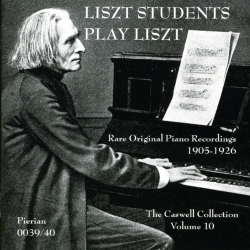
4
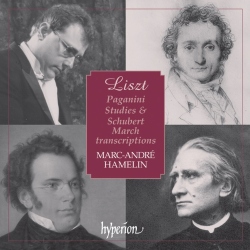
Schuberts Märsche (3) (after Schubert, D. 819 & 968b), p. 426
Trauermarsch - Grande Marche funèbre
10:46
5
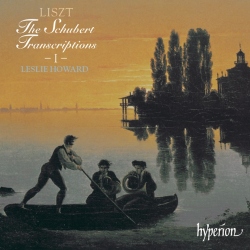
Schuberts Märsche (3) (after Schubert, D. 819 & 968b), p. 426
Trauermarsch - Grande Marche funèbre
18:33
Featured Music
1
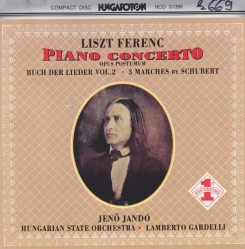
Schuberts Märsche (3) (after Schubert, D. 819 & 968b), p. 426
No. 1, Trauermarsch- Grande Marche Funèbre
10:25
3
Schuberts Märsche (3) (after Schubert, D. 819 & 968b), p. 426
No. 3, Grande Marche caractéristique
11:14