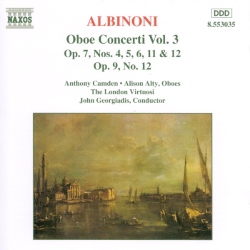
Tomaso Albinoni
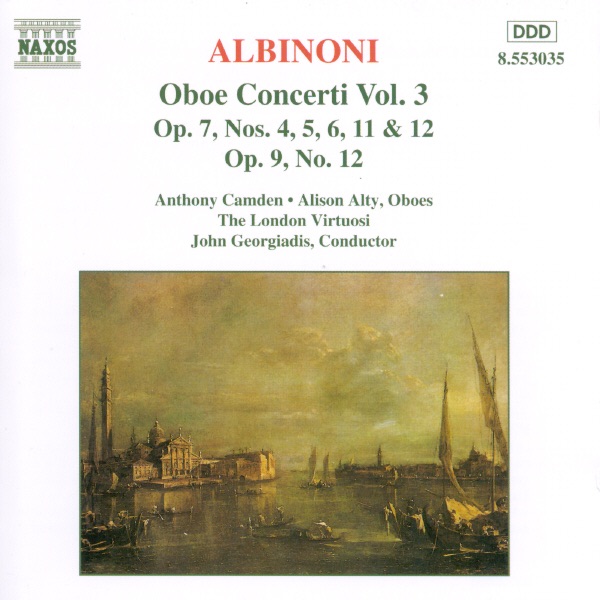
Concerto à cinque, Op. 7 No. 4 in G major
Released Album
Recent Album


Works Info
Composer:Tomaso AlbinoniGenre:ConcertoStyle:ConcertoCompose Date:1715Publication Date:1715Average_duration:7:21Movement_count:3Movement ....Tomaso Albinoni's Concerto à cinque, Op. 7 No. 4 in G major is a Baroque concerto for solo violin, strings, and continuo. It was composed in the early 18th century and premiered in Venice, Italy. The concerto is divided into three movements: Allegro, Adagio, and Allegro. The first movement, Allegro, is characterized by its lively and energetic tempo. The solo violin leads the way with virtuosic runs and trills, while the strings and continuo provide a supportive and rhythmic accompaniment. The movement is structured in a typical Baroque concerto form, with alternating solo and tutti sections. The second movement, Adagio, is a slow and lyrical aria for the solo violin. The strings and continuo provide a delicate and understated accompaniment, allowing the soloist to shine. The movement is marked by its expressive melodies and ornamental flourishes. The final movement, Allegro, returns to the lively and energetic tempo of the first movement. The solo violin once again takes center stage with its virtuosic runs and trills, while the strings and continuo provide a supportive and rhythmic accompaniment. The movement is characterized by its playful and joyful spirit, with a lively and celebratory conclusion. Overall, Albinoni's Concerto à cinque, Op. 7 No. 4 in G major is a prime example of Baroque concerto writing. It showcases the virtuosity of the solo violin, while also highlighting the interplay between the soloist and the ensemble. The concerto's three movements offer a range of moods and emotions, from lively and energetic to slow and lyrical, making it a beloved work in the Baroque repertoire.More....
Works Music
Released Music