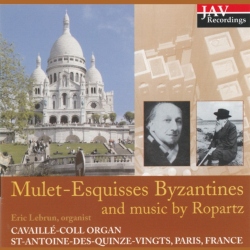
Henri Mulet
Esquisses Byzantines (10)
Released Album
Recent Album

Works Info
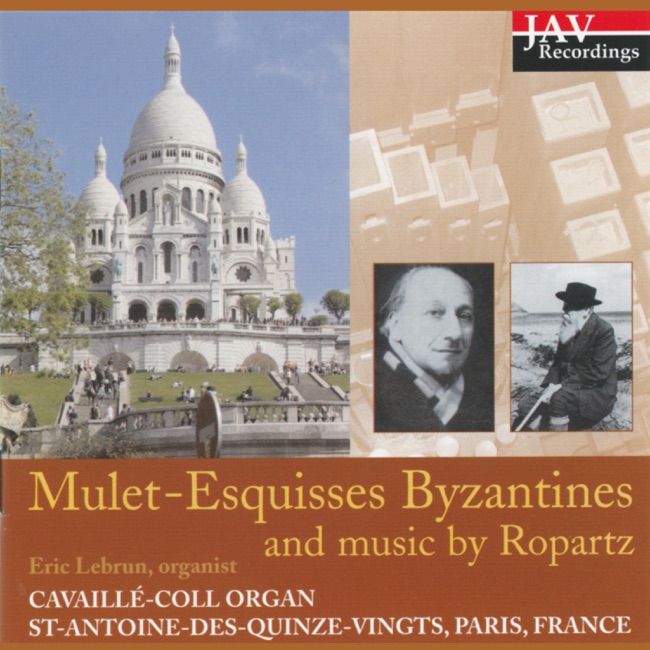
Composer:Henri MuletGenre:KeyboardCompose Date:1914-1919Publication Date:1920Average_duration:48:57Movement_count:10Movement ....Henri Mulet was a French organist and composer who lived from 1878 to 1967. He is best known for his organ music, which is characterized by its virtuosity and its use of colorful harmonies and textures. One of his most famous works is "Esquisses Byzantines (10)," a collection of ten pieces for organ that was composed in 1914. "Esquisses Byzantines" premiered in 1914 at the Church of Sainte-Clotilde in Paris, where Mulet was the organist. The work is divided into ten movements, each of which is inspired by a different aspect of Byzantine art and culture. The movements are as follows: 1. Introduction: This movement sets the tone for the entire work, with its grand, majestic chords and its use of the full range of the organ. 2. Chant Byzantin: This movement is based on a traditional Byzantine chant, which Mulet uses as the basis for a series of variations. 3. Carillon-Sortie: This movement is a lively, energetic piece that features a series of cascading arpeggios and a driving rhythm. 4. Oraison: This movement is a slow, contemplative piece that features a simple, lyrical melody and a rich, warm harmony. 5. Tu es Petrus: This movement is based on the Gregorian chant of the same name, which is traditionally sung on the feast of Saint Peter. 6. Rosace: This movement is named after the rose window that is a common feature of Gothic cathedrals. It features a series of intricate, interlocking melodies that create a sense of complexity and depth. 7. Paraphrase sur le Salve Regina: This movement is a virtuosic tour-de-force that features a series of dazzling runs and arpeggios. 8. Offertoire: This movement is a slow, meditative piece that features a simple, chant-like melody and a rich, warm harmony. 9. Toccata: This movement is a lively, energetic piece that features a series of rapid-fire runs and arpeggios. 10. Final: This movement brings the work to a close with a grand, majestic flourish that features the full power of the organ. Overall, "Esquisses Byzantines" is characterized by its use of rich harmonies, intricate textures, and virtuosic organ writing. It is a testament to Mulet's skill as a composer and his deep appreciation for the art and culture of Byzantium.More....
Works Music
Released Music

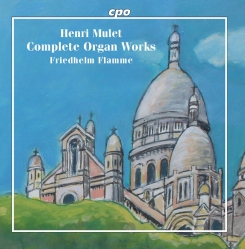
8
2:57