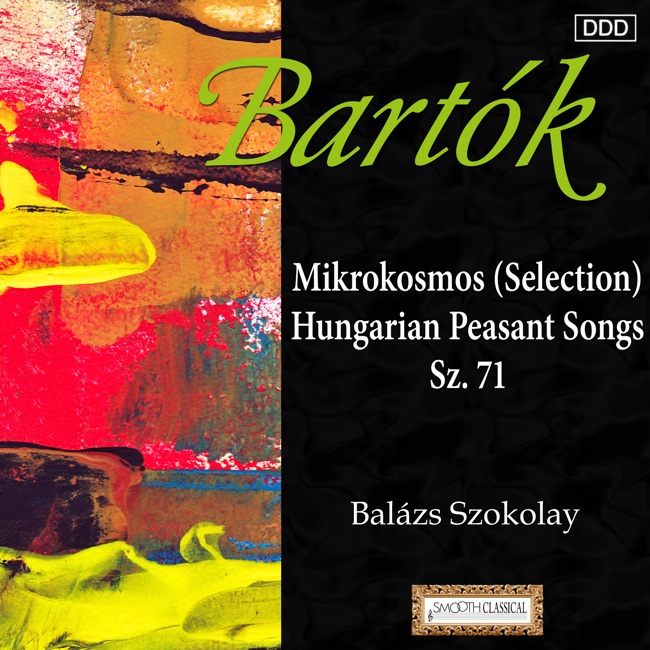
Béla Bartók
Chords Together and in Opposition, Sz. 107/5/122
Released Album
Recent Album
Works Info
Composer:Béla BartókGenre:KeyboardStyle:Character PieceCompose Date:1926 - 1939Average_duration:0:49Béla Bartók's "Chords Together and in Opposition" is a piece for solo piano, composed in 1917 and premiered in Budapest in 1920. It is the fifth movement of his larger work, "Mikrokosmos," which consists of 153 progressive piano pieces. The piece is characterized by its use of dissonant chords and complex rhythms. It begins with a series of chords played together, followed by a section where the chords are played in opposition to each other. This creates a sense of tension and conflict, which is resolved in the final section of the piece. The first section of the piece is marked "Allegro," and features a series of chords played together in a rapid, staccato fashion. The chords are dissonant and create a sense of unease. This section is followed by a slower, more contemplative section marked "Andante," where the chords are played in opposition to each other. This creates a sense of conflict and tension, as the two hands seem to be working against each other. The final section of the piece is marked "Allegro molto," and features a return to the rapid, staccato chords of the opening section. However, this time the chords are played in a more harmonious manner, resolving the tension created in the middle section of the piece. Overall, "Chords Together and in Opposition" is a challenging and complex piece that showcases Bartók's innovative approach to composition. Its use of dissonant chords and complex rhythms make it a unique and memorable addition to the piano repertoire.More....
Works Music