Napoléon Coste
Etude for guitar in G minor, Op. 38/16
Released Album
Recent Album
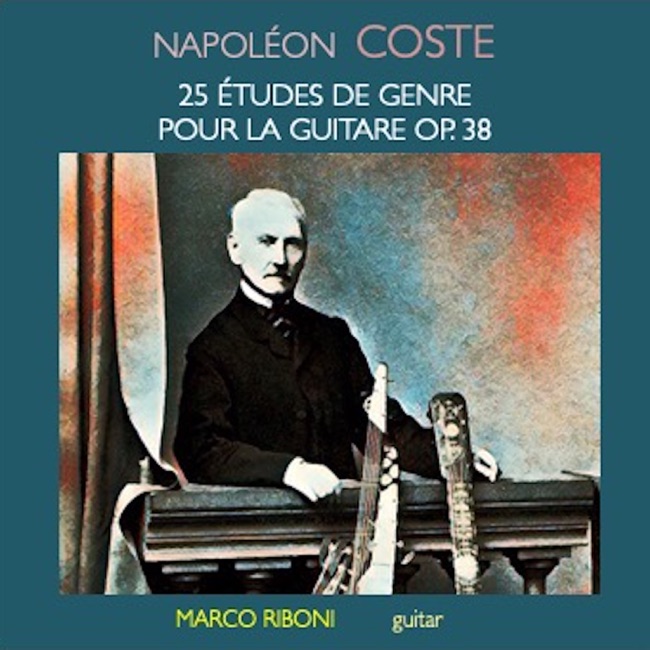
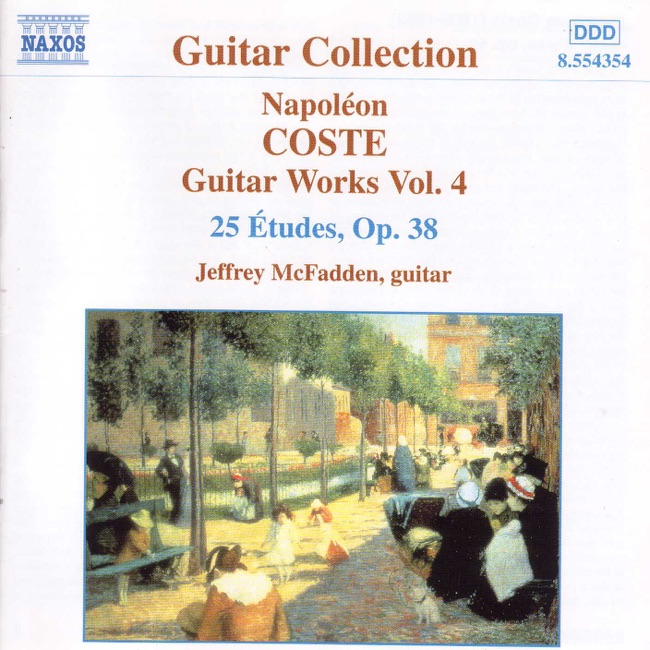
Works Info
Composer:Napoléon CosteGenre:ChamberStyle:EtudeAverage_duration:2:03Napoléon Coste was a French guitarist and composer who lived from 1805 to 1883. He was a prominent figure in the Romantic era of classical guitar music and is known for his virtuosic compositions for the instrument. One of his most famous works is the "Etude for guitar in G minor, Op. 38/16," which was composed in 1868. The "Etude for guitar in G minor, Op. 38/16" is a solo guitar piece that is approximately three minutes in length. It is part of a collection of 25 etudes that Coste composed for the guitar, which were published in 1868. The etude is in G minor and is written in standard notation. The piece is divided into three distinct sections or movements. The first movement is marked "Allegro moderato" and is characterized by its fast-paced arpeggios and intricate fingerpicking patterns. The second movement is marked "Andantino" and is a slower, more lyrical section that features melodic lines and chordal accompaniment. The final movement is marked "Allegro" and is a return to the fast-paced arpeggios and fingerpicking patterns of the first movement. The "Etude for guitar in G minor, Op. 38/16" is a challenging piece to play and requires a high level of technical proficiency on the guitar. It is known for its intricate fingerpicking patterns, fast-paced arpeggios, and complex chord progressions. The piece also showcases Coste's ability to write music that is both technically demanding and musically expressive. The "Etude for guitar in G minor, Op. 38/16" premiered in 1868, along with the rest of the etudes in the collection. It has since become a staple of the classical guitar repertoire and is frequently performed by guitarists around the world. The piece is a testament to Coste's skill as a composer and his contribution to the development of classical guitar music in the Romantic era.More....
Works Music