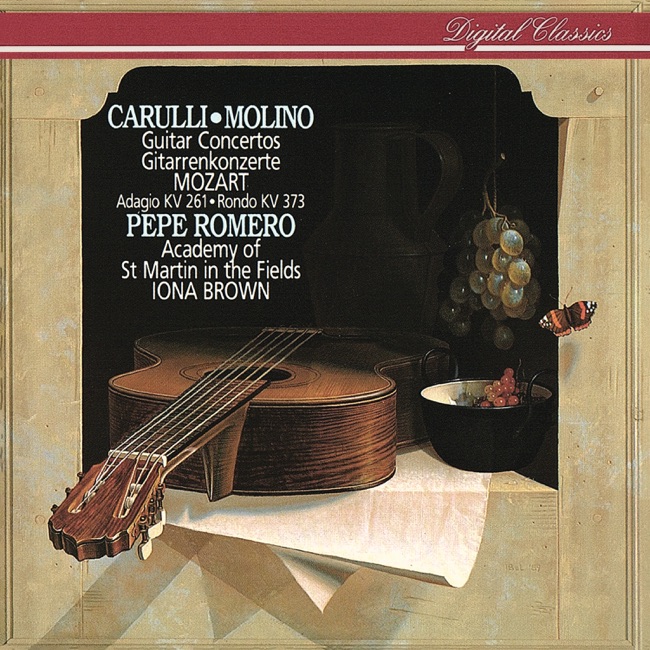
Francesco Molino
Concerto for guitar & orchestra in E minor, Op. 56
Released Album
Recent Album

Works Info
Composer:Francesco MolinoGenre:ConcertoStyle:ConcertoAverage_duration:24:28The Concerto for guitar & orchestra in E minor, Op. 56, was composed by Francesco Molino, an Italian guitarist and composer, in the early 19th century. The exact date of composition is unknown, but it is believed to have been written around 1810. The concerto was premiered in Paris, France, in 1812, with Molino himself as the soloist. The concerto consists of three movements: Allegro moderato, Romance, and Rondo. The first movement, Allegro moderato, is in sonata form and begins with a lively orchestral introduction. The guitar enters with a virtuosic solo passage, followed by a lyrical theme played by the orchestra. The movement features a number of technical challenges for the soloist, including rapid scale passages and arpeggios. The second movement, Romance, is a slow and expressive piece in E major. The guitar plays a beautiful melody accompanied by the orchestra, with the soloist showcasing their ability to play with sensitivity and nuance. The movement is notable for its use of harmonics, which add a delicate and ethereal quality to the sound. The final movement, Rondo, is a lively and energetic piece in E major. The guitar and orchestra trade off playful and virtuosic passages, with the soloist once again demonstrating their technical prowess. The movement features a number of rapid scale runs and arpeggios, as well as a catchy and memorable theme. Overall, the Concerto for guitar & orchestra in E minor, Op. 56, is a showcase for the guitar as a solo instrument, highlighting its versatility and expressive capabilities. Molino's writing for the guitar is virtuosic and challenging, while also allowing for moments of lyricism and sensitivity. The concerto remains a popular and beloved work in the guitar repertoire to this day.More....
Works Music
Released Music