


Giovanni Pergolesi
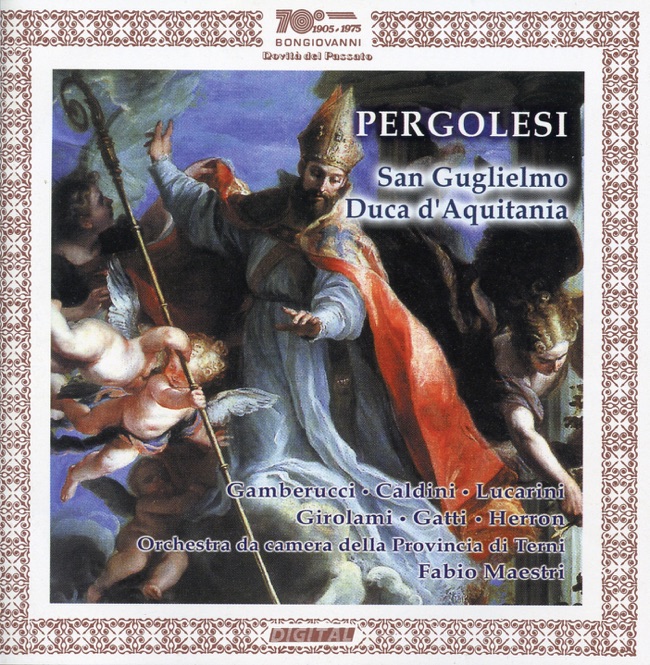
Li prodigi della divina grazia nella conversione di S Gugliemo Duca d'Aquitania
Released Album
Recent Album
Works Info
Composer:Giovanni PergolesiGenre:VocalStyle:Vocal MusicFirst Performance:1731"Li prodigi della divina grazia nella conversione di S Gugliemo Duca d'Aquitania" is a sacred oratorio composed by Giovanni Pergolesi in 1731. The piece was premiered in the church of San Lorenzo in Naples on September 4, 1731. The oratorio is divided into three movements, each depicting a different stage in the life of Saint William of Aquitaine. The first movement, "Conversione," portrays William's conversion to Christianity after a life of debauchery and sin. The second movement, "Penitenza," depicts William's penance and his decision to become a monk. The final movement, "Gloria," celebrates William's sainthood and his ascension to heaven. The oratorio is characterized by Pergolesi's use of expressive melodies and harmonies, as well as his skillful handling of the vocal and instrumental textures. The piece features a solo soprano, alto, tenor, and bass, as well as a chorus and a small orchestra consisting of strings, oboes, and continuo. Pergolesi's "Li prodigi della divina grazia nella conversione di S Gugliemo Duca d'Aquitania" is a prime example of the Baroque oratorio tradition, which was popular in Italy during the 17th and 18th centuries. The oratorio was often performed in churches during the Lenten season, and it was intended to provide a spiritual experience for the audience through the use of music and drama. Overall, Pergolesi's "Li prodigi della divina grazia nella conversione di S Gugliemo Duca d'Aquitania" is a masterful work of sacred music that showcases the composer's skill and creativity. Its enduring popularity is a testament to its timeless beauty and emotional power.More....
Works Music
Released Music
1
The wonders of divine grace in the conversion of St William Duke of Aquitaine
Act III: Aria. Manca la guida al piè
6:35
2
Pergolesi: Li prodigi della divina grazia nella conversione di San Guglielmo Duca d'Aquitania (Live)
5:32
3
The wonders of divine grace in the conversion of St William Duke of Aquitaine
Aria. Manca la guida al piè
6:31
4
The wonders of divine grace in the conversion of St William Duke of Aquitaine
Manca le guida al pie
8:49