Johann Stamitz
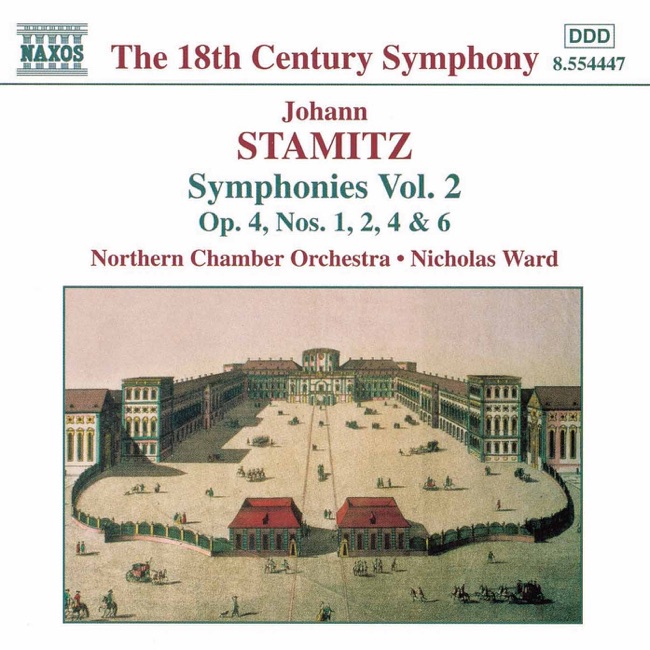
Symphony in E flat major, Op. 4/6
Released Album
Recent Album
Works Info
Composer:Johann StamitzGenre:OrchestralStyle:SymphonyAverage_duration:15:12Johann Stamitz's Symphony in E flat major, Op. 4/6, was composed in the mid-18th century during the height of the Mannheim School. The exact date of composition is unknown, but it is believed to have been written between 1745 and 1750. The symphony was premiered in Mannheim, Germany, where Stamitz was the concertmaster of the court orchestra. The Symphony in E flat major, Op. 4/6, is a four-movement work that showcases Stamitz's mastery of orchestration and his innovative use of musical form. The first movement, marked Allegro, is in sonata form and features a lively and energetic theme that is passed between the different sections of the orchestra. The second movement, marked Andante, is a lyrical and expressive piece that features a solo violin accompanied by the rest of the orchestra. The third movement, marked Menuetto, is a traditional minuet and trio that showcases Stamitz's skill in writing for the dance. The final movement, marked Presto, is a fast and lively piece that brings the symphony to a thrilling conclusion. One of the characteristics of Stamitz's Symphony in E flat major, Op. 4/6, is its use of dynamic contrasts and sudden shifts in mood. Stamitz was known for his use of the Mannheim Rocket, a musical device that involved a sudden crescendo followed by a quick diminuendo, which created a sense of excitement and anticipation in the listener. Another characteristic of the symphony is its use of orchestration, with Stamitz making full use of the different sections of the orchestra to create a rich and varied sound. Overall, Johann Stamitz's Symphony in E flat major, Op. 4/6, is a masterful work that showcases the composer's skill in orchestration and his innovative use of musical form. Its premiere in Mannheim helped to establish the city as a center of musical innovation and paved the way for the development of the Classical style of music in the years to come.More....