Matthias Weckmann
Sonata à 4 for cornettino, violin, trombone, bassoon & continuo
Released Album
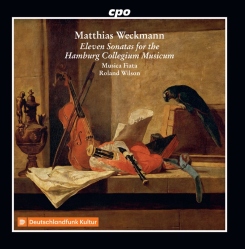
Recent Album
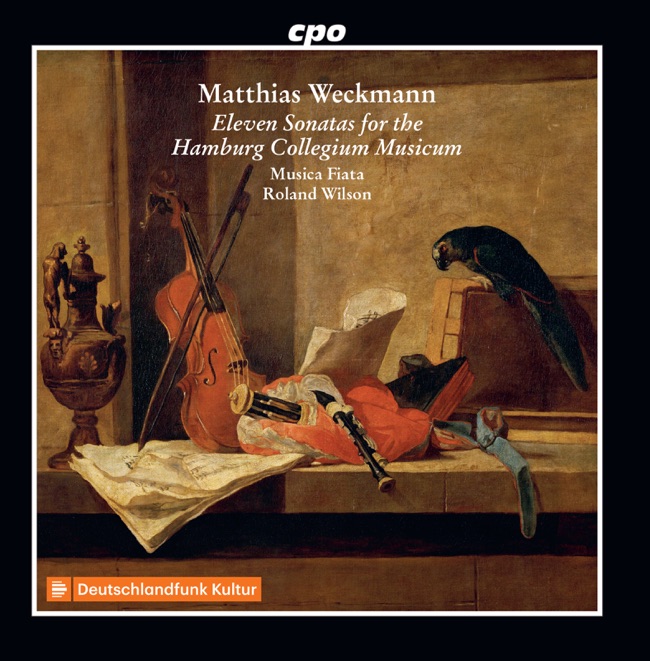
Featured Album
Works Info
Composer:Matthias WeckmannGenre:ChamberStyle:SonataCompose Date:ca. 1650Average_duration:4:07Matthias Weckmann's 'Sonata à 4 for cornettino, violin, trombone, bassoon & continuo' is a Baroque instrumental composition that was composed in the mid-17th century. The exact date of composition is unknown, but it is believed to have been written between 1650 and 1670. The piece was premiered in Germany, where Weckmann spent most of his career as a composer and musician. The 'Sonata à 4' is divided into four movements, each with its own distinct character and style. The first movement is a lively and energetic Allegro, featuring a virtuosic solo for the cornettino, a small trumpet-like instrument. The violin, trombone, and bassoon provide a rich and colorful accompaniment, with the continuo (usually played on a harpsichord or organ) providing a steady rhythmic foundation. The second movement is a slower and more introspective Adagio, with the cornettino and violin playing a plaintive melody over a simple bass line. The trombone and bassoon add subtle harmonies and counterpoint, creating a sense of depth and complexity. The third movement is a lively and dance-like Allegro, with the cornettino and violin playing a playful melody that is echoed and elaborated upon by the trombone and bassoon. The continuo provides a driving rhythm that propels the music forward, creating a sense of joyful exuberance. The final movement is a stately and majestic Passacaglia, with the cornettino and violin playing a simple but haunting melody over a repeating bass line. The trombone and bassoon add rich harmonies and counterpoint, building to a powerful climax before resolving into a peaceful and serene conclusion. Overall, the 'Sonata à 4' is a masterful example of Baroque instrumental music, showcasing Weckmann's skill as a composer and his ability to create complex and engaging music for a small ensemble. The piece is notable for its use of the cornettino, an instrument that was popular in the Baroque era but has since fallen out of use, as well as its rich and colorful harmonies and intricate counterpoint.More....
Works Music