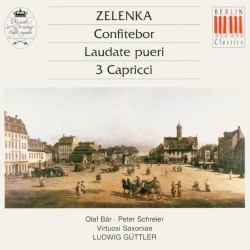
Jan Dismas Zelenka
Confitebor tibi Domine in C minor, ZWV 71
Released Album
Recent Album
Works Info
Composer:Jan Dismas ZelenkaGenre:ChoralStyle:ChoralCompose Date:1729Publication Date:1981Average_duration:9:02Jan Dismas Zelenka was a Czech composer of the Baroque era, known for his intricate and innovative compositions. One of his most notable works is the "Confitebor tibi Domine in C minor, ZWV 71," a sacred choral piece that showcases his mastery of counterpoint and harmonic complexity. Zelenka composed the "Confitebor tibi Domine" in 1730, during his tenure as the court composer for the Elector of Saxony in Dresden. The piece was likely written for a special occasion, such as a church service or a royal celebration. It consists of nine movements, each of which features a different combination of voices and instruments. The first movement, "Confitebor tibi Domine," is a choral fugue that sets the tone for the entire piece. The voices enter one by one, weaving intricate melodies and harmonies that build to a powerful climax. The second movement, "Beatus vir," features a solo bass voice accompanied by strings and continuo. The bass sings a virtuosic aria that showcases Zelenka's skill at writing for the voice. The third movement, "Gloria Patri," is a choral fugue that returns to the theme of the first movement. The voices interweave in complex counterpoint, creating a rich tapestry of sound. The fourth movement, "Sicut erat in principio," is a duet for soprano and alto voices. The two singers trade off melodic lines, creating a dialogue that is both intimate and grand. The fifth movement, "Et in saecula saeculorum," is a choral fugue that features a lively and energetic melody. The voices bounce off each other in a playful and joyful manner. The sixth movement, "Amen," is a short choral piece that serves as a bridge to the final three movements. The seventh movement, "Dixit Dominus," is a choral fugue that features a majestic and regal melody. The voices build to a powerful climax, creating a sense of awe and reverence. The eighth movement, "Juravit Dominus," is a duet for tenor and bass voices. The two singers trade off melodic lines, creating a sense of tension and resolution. The final movement, "Deus meus adiutor," is a choral fugue that brings the piece to a triumphant close. The voices interweave in complex counterpoint, creating a sense of grandeur and majesty. The "Confitebor tibi Domine" is a masterpiece of Baroque choral music, showcasing Zelenka's skill at writing for voices and instruments. Its intricate melodies and harmonies, combined with its grandeur and majesty, make it a timeless work of art.More....
Works Music
Released Music