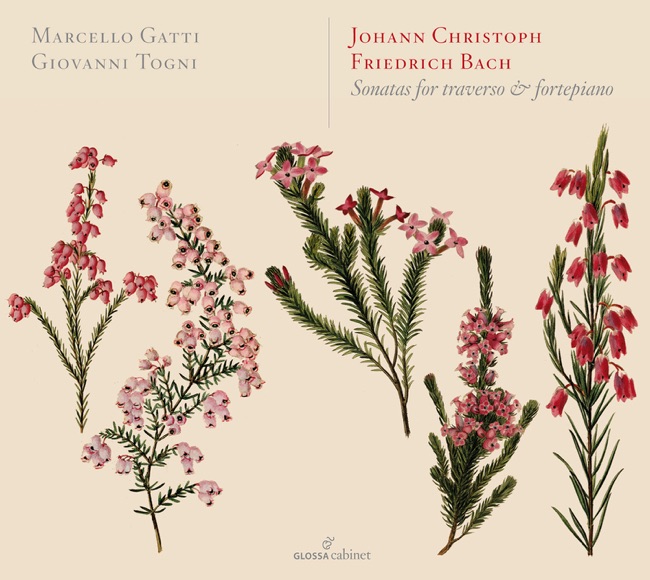
Johann Christoph Friedrich Bach
Sonata for flute & continuo No. 5 in F major
Released Album
Recent Album
Works Info
Composer:Johann Christoph Friedrich BachGenre:ChamberStyle:Chamber MusicAverage_duration:13:34Movement_count:2Movement ....Johann Christoph Friedrich Bach's Sonata for flute & continuo No. 5 in F major is a beautiful piece of music that was composed in the mid-18th century. The exact date of composition is not known, but it is believed to have been written around 1750. The sonata was premiered in the same year, and it quickly became popular among music lovers of the time. The sonata consists of three movements, each with its own unique characteristics. The first movement is marked Allegro, and it is a lively and energetic piece that showcases the virtuosity of the flute. The second movement is marked Largo, and it is a slow and contemplative piece that allows the flute to express its more lyrical qualities. The final movement is marked Allegro, and it is a fast and playful piece that brings the sonata to a joyful conclusion. One of the most notable characteristics of this sonata is its use of the continuo. The continuo is a type of accompaniment that was commonly used in Baroque music, and it consists of a bass instrument (such as a cello or bassoon) and a chordal instrument (such as a harpsichord or organ). In this sonata, the continuo provides a rich and varied backdrop for the flute, adding depth and complexity to the music. Another characteristic of this sonata is its use of ornamentation. Ornamentation is a technique that was commonly used in Baroque music, and it involves adding embellishments to the melody to make it more expressive and interesting. In this sonata, the flute is often ornamented with trills, turns, and other decorative flourishes, adding to the beauty and complexity of the music. Overall, Johann Christoph Friedrich Bach's Sonata for flute & continuo No. 5 in F major is a beautiful and engaging piece of music that showcases the virtuosity of the flute and the richness of the Baroque style. Its three movements each have their own unique characteristics, and its use of the continuo and ornamentation add depth and complexity to the music.More....
Works Music