Virgil Thomson
A Solemn Music
Released Album
Recent Album
Works Info
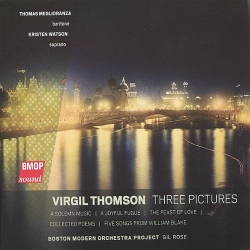
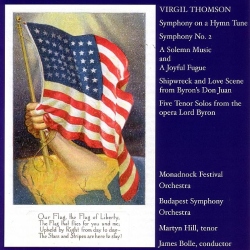
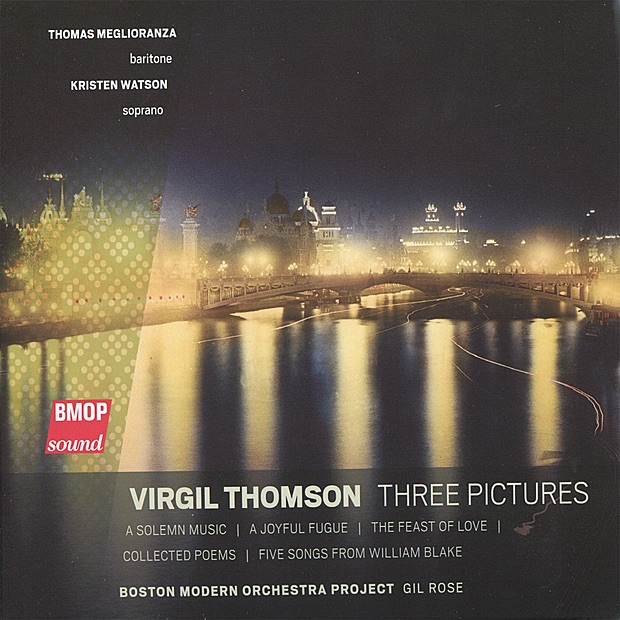
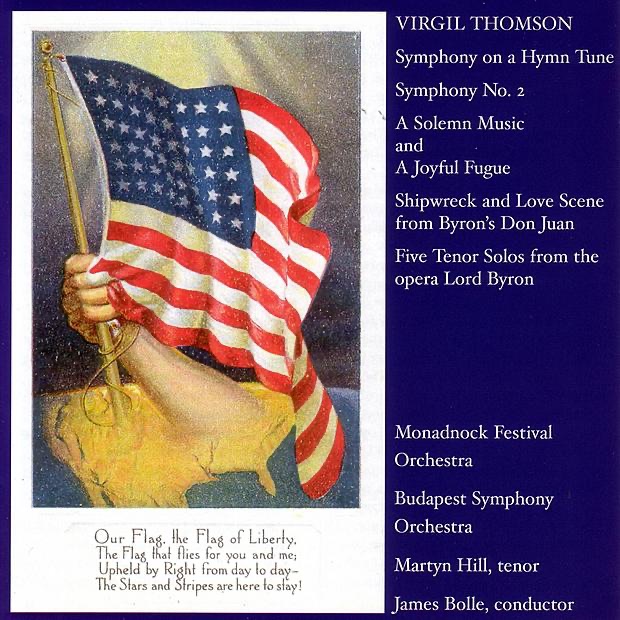
Composer:Virgil ThomsonGenre:OrchestralStyle:OrchestralCompose Date:1961Average_duration:7:02A Solemn Music is a choral work composed by Virgil Thomson in 1949. It was premiered on May 4, 1950, by the New York Philharmonic under the direction of Dimitri Mitropoulos. The piece is divided into three movements, each with its own distinct characteristics. The first movement, marked "Slow and solemn," begins with a unison chant-like melody in the basses, which is then taken up by the rest of the choir. The harmonies are simple and mostly diatonic, with occasional dissonances adding a sense of tension. The text, taken from the Book of Common Prayer, is a prayer for peace and unity: "Grant us thy peace, Lord, through the coming night; turn thou for us its darkness into light." The second movement, marked "Moderately fast," is a lively fugue based on a theme introduced by the altos. The texture is contrapuntal, with each voice entering in turn with the same theme. The harmonies are more complex than in the first movement, with frequent chromaticism and unexpected modulations. The text, also from the Book of Common Prayer, is a prayer for protection: "Be present, O merciful God, and protect us through the hours of this night." The third movement, marked "Slow and solemn," returns to the mood of the first movement. The melody is again chant-like, but this time it is more elaborate, with frequent melismas and ornamentation. The harmonies are more dissonant than in the first movement, with clusters of notes creating a sense of unease. The text, from the hymn "Te lucis ante terminum," is a prayer for forgiveness and mercy: "To thee before the close of day, Creator of the world, we pray that with thy wonted favor thou wouldst be our guard and keeper now." Overall, A Solemn Music is a powerful and moving work that showcases Thomson's skill as a composer of choral music. The simple melodies and harmonies of the first and third movements contrast with the complex counterpoint and chromaticism of the second movement, creating a sense of unity and diversity within the piece. The text, drawn from the Book of Common Prayer and a traditional hymn, adds a spiritual dimension to the music, making it a fitting choice for religious services and other solemn occasions.More....
Works Music
Released Music