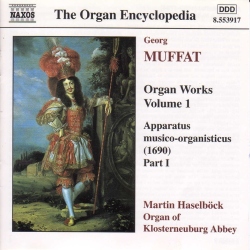
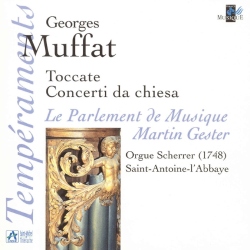
Georg Muffat
Toccata for organ No. 8 in G major
Released Album
Recent Album

Works Info
Composer:Georg MuffatGenre:KeyboardStyle:ToccataCompose Date:1690Publication Date:1690Average_duration:7:04Georg Muffat was a Baroque composer and organist who lived from 1653 to 1704. He was born in Savoy, which is now part of France, but spent most of his life in Germany and Austria. Muffat was known for his keyboard music, particularly his toccatas for organ. The Toccata for organ No. 8 in G major is one of Muffat's most famous works. It was composed in the late 17th century and premiered in Vienna, Austria. The piece is divided into three movements: a fast and lively toccata, a slower and more contemplative adagio, and a final fugue. The first movement of the Toccata for organ No. 8 in G major is characterized by its virtuosic keyboard writing and lively rhythms. The toccata form was popular in the Baroque era and was often used to showcase a performer's technical skill. Muffat's toccata is no exception, with its rapid arpeggios, trills, and ornamentation. The second movement, the adagio, provides a contrast to the first. It is a slower and more introspective piece, with a more lyrical melody and a more subdued accompaniment. The adagio is notable for its use of suspensions and dissonances, which create a sense of tension and release. The final movement of the Toccata for organ No. 8 in G major is a fugue. A fugue is a type of composition in which a theme is introduced and then imitated by different voices or instruments. Muffat's fugue is based on a simple, catchy melody that is passed between the different parts of the organ. The fugue builds in intensity and complexity as it progresses, culminating in a thrilling finale. Overall, the Toccata for organ No. 8 in G major is a prime example of Baroque keyboard music. It showcases Muffat's skill as a composer and organist, and demonstrates the technical and expressive possibilities of the organ.More....