Havergal Brian
Symphony No. 11
Released Album
Recent Album
Works Info
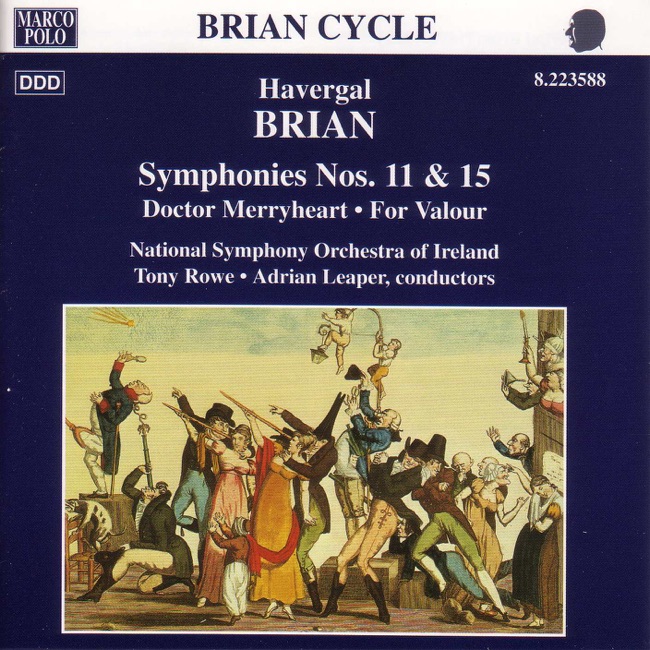
Composer:Havergal BrianGenre:SymphonyStyle:SymphonyAverage_duration:24:33Symphony No. 11, also known as the "Symphony of Marches," was composed by Havergal Brian in 1960. The symphony premiered on October 5, 1961, at the Royal Festival Hall in London, conducted by Sir Adrian Boult. The symphony is divided into four movements, each of which is a march. The first movement, "March of the City of London," is a grand and majestic march that features a prominent brass section. The second movement, "March of the Kitchen Utensils," is a playful and lighthearted march that features percussion instruments such as pots, pans, and spoons. The third movement, "March of the Toys," is a whimsical and charming march that features a variety of toy instruments. The final movement, "March of the Ogres," is a dark and menacing march that features dissonant harmonies and a foreboding atmosphere. One of the most notable characteristics of Symphony No. 11 is its use of unconventional instruments. In addition to the toy instruments and kitchen utensils, the symphony also features a siren, a typewriter, and a vacuum cleaner. These unusual sounds add a unique and playful element to the symphony. Another characteristic of Symphony No. 11 is its use of complex harmonies and rhythms. Brian was known for his experimental approach to composition, and this symphony is no exception. The dissonant harmonies and intricate rhythms create a sense of tension and unease throughout the symphony. Overall, Symphony No. 11 is a unique and innovative work that showcases Brian's experimental approach to composition. Its use of unconventional instruments and complex harmonies make it a challenging but rewarding piece for both performers and listeners.More....
Works Music
Released Music