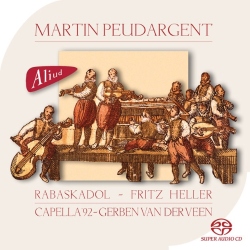
Martin Peudargent
Pater noster

Works Info
Composer:Martin PeudargentGenre:ChoralAverage_duration:4:51Martin Peudargent's 'Pater noster' is a choral work that was composed in the 16th century. The exact date of composition is not known, but it is believed to have been written sometime between 1550 and 1570. The piece is a setting of the Lord's Prayer in Latin, and it is written for four voices (soprano, alto, tenor, and bass). The premiere of 'Pater noster' is also not known, but it is likely that it was first performed in a church or cathedral setting. The piece was likely intended for use in religious services, and it would have been performed by a choir of trained singers. 'Pater noster' is divided into several movements, each of which corresponds to a different section of the Lord's Prayer. The first movement is a simple and straightforward setting of the opening lines of the prayer, with each voice singing in unison. The second movement is more complex, with the voices weaving in and out of each other in a contrapuntal texture. The third movement is a slower and more contemplative setting of the prayer, with the voices singing in a homophonic texture. The fourth movement is a lively and energetic setting of the phrase "et ne nos inducas in tentationem" ("and lead us not into temptation"), with the voices bouncing off each other in a playful and rhythmic way. The final movement is a grand and majestic setting of the closing lines of the prayer, with the voices soaring to a climactic conclusion. Throughout the piece, Peudargent employs a variety of musical techniques, including imitative counterpoint, homophonic textures, and rhythmic syncopation. Overall, 'Pater noster' is a beautiful and expressive choral work that showcases Peudargent's skill as a composer. Its timeless message and elegant musical language continue to resonate with audiences today.More....