Franz Liszt
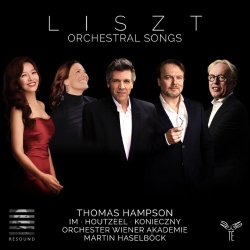
Lieder von Franz Schubert, transcriptions for voice & orchestra, S. 375 (LW N63) (after Schubert, D. 828, 118, 321 328d, 957/13)
Released Album
Recent Album

Featured Album
Works Info
Composer:Franz LisztGenre:VocalCompose Date:1860 -
1863Average_duration:05:06Movement_count:5Movement ....Franz Liszt's "Lieder von Franz Schubert, transcriptions for voice & orchestra, S. 375 (LW N63) (after Schubert, D. 828, 118, 321 328d, 957/13)" is a collection of six songs originally composed by Franz Schubert and transcribed by Liszt for voice and orchestra. The work was composed in 1840 and premiered in Weimar, Germany on August 22, 1840. The six songs included in the collection are "Erlkönig," "Gretchen am Spinnrade," "Die junge Nonne," "Der Doppelgänger," "Auf dem Wasser zu singen," and "Der Atlas." Each song is a setting of a poem by a different author, and each has its own unique character and mood. The first song, "Erlkönig," is a dramatic and intense setting of a poem by Johann Wolfgang von Goethe. The music is fast-paced and full of tension, reflecting the story of a father and son being pursued by the supernatural Erlking. "Gretchen am Spinnrade" is a more introspective and melancholy song, based on a poem by Goethe. The music is slow and contemplative, with a haunting melody that reflects the sadness and longing of the protagonist. "Die junge Nonne" is a setting of a poem by Johann Baptist Mayrhofer. The music is slow and mournful, with a sense of resignation and acceptance of the protagonist's fate. "Der Doppelgänger" is a dark and brooding song, based on a poem by Heinrich Heine. The music is slow and ominous, with a sense of foreboding and impending doom. "Auf dem Wasser zu singen" is a more lighthearted and joyful song, based on a poem by Friedrich Leopold zu Stolberg-Stolberg. The music is fast-paced and energetic, with a sense of freedom and joy. Finally, "Der Atlas" is a powerful and dramatic song, based on a poem by Heinrich Heine. The music is slow and intense, with a sense of overwhelming emotion and power. Overall, Liszt's transcriptions of Schubert's songs are masterful works of art, showcasing both composers' talents and abilities. The music is rich and complex, with a wide range of emotions and moods, and the orchestration adds depth and complexity to the original songs.More....
Works Music
Released Music
1
3:49
2
4:43
Featured Music
1
Songs by Franz Schubert, transcriptions for voice & orchestra, p. 375 (LW N63) (after Schubert, D. 828, 118, 321 328d, 957/13)
Der Doppelgänger D.957, S 375 / 5-R 651/5
5:6
2
4:6
3
3:38
4
3:34
5
3:54
6
4:0