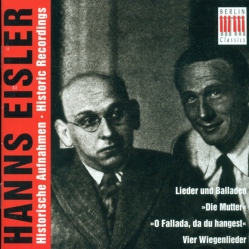
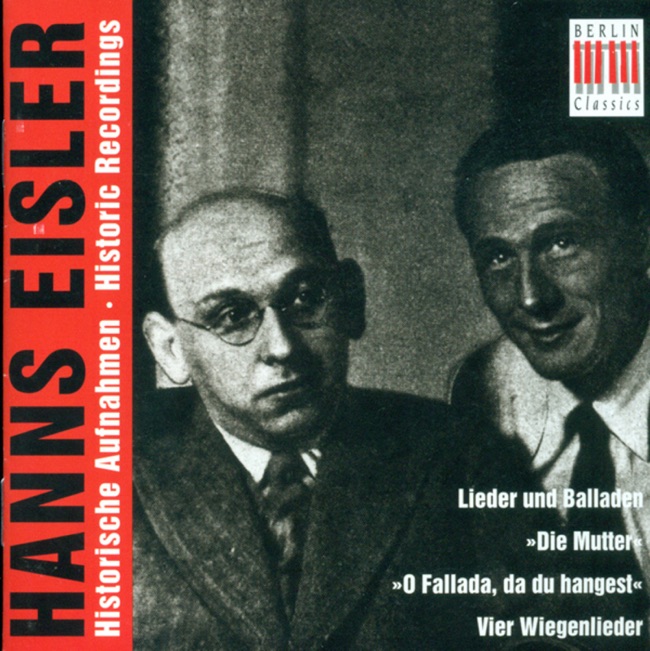
Hanns Eisler
Balladen (4), Op. 22
Released Album
Recent Album

Works Info
Composer:Hanns EislerGenre:VocalStyle:Vocal MusicCompose Date:1930Average_duration:12:21Movement_count:4Movement ....Hanns Eisler's 'Balladen (4), Op. 22' is a collection of four ballads for voice and piano, composed in 1939. The premiere of the work took place in New York in 1943, with the composer himself at the piano and Lotte Lenya as the vocalist. The four movements of the work are titled 'Die Ballade vom Wasserrad', 'Die Ballade vom Nigger Jim', 'Die Ballade von der Krüppelgarde' and 'Die Ballade vom angenehmen Leben'. The first movement, 'Die Ballade vom Wasserrad', is a setting of a poem by Bertolt Brecht. The ballad tells the story of a water wheel that is used to grind grain, but is eventually replaced by a steam engine. The music is characterized by a driving rhythm and a sense of urgency, reflecting the theme of industrialization and progress. The second movement, 'Die Ballade vom Nigger Jim', is based on a text by John Steinbeck. The ballad tells the story of a slave who escapes from his master and travels down the Mississippi River on a raft. The music is characterized by a bluesy melody and a sense of longing, reflecting the theme of freedom and escape. The third movement, 'Die Ballade von der Krüppelgarde', is a setting of a poem by Erich Weinert. The ballad tells the story of a group of disabled veterans who form a guard to protect their community from fascist attacks. The music is characterized by a martial rhythm and a sense of defiance, reflecting the theme of resistance and solidarity. The fourth and final movement, 'Die Ballade vom angenehmen Leben', is a setting of a poem by Brecht. The ballad tells the story of a man who dreams of a life of luxury and ease, but ultimately realizes that such a life is unfulfilling. The music is characterized by a waltz-like rhythm and a sense of irony, reflecting the theme of disillusionment and the emptiness of materialism. Overall, 'Balladen (4), Op. 22' is a powerful and politically charged work that reflects Eisler's commitment to socialist ideals and his belief in the power of music to inspire social change. The ballads are characterized by a range of musical styles and moods, from the driving rhythms of 'Die Ballade vom Wasserrad' to the wistful melodies of 'Die Ballade vom Nigger Jim'. Through these diverse musical expressions, Eisler creates a work that is both emotionally engaging and intellectually stimulating, inviting listeners to reflect on the social and political issues of their time.More....
Works Music
Released Music