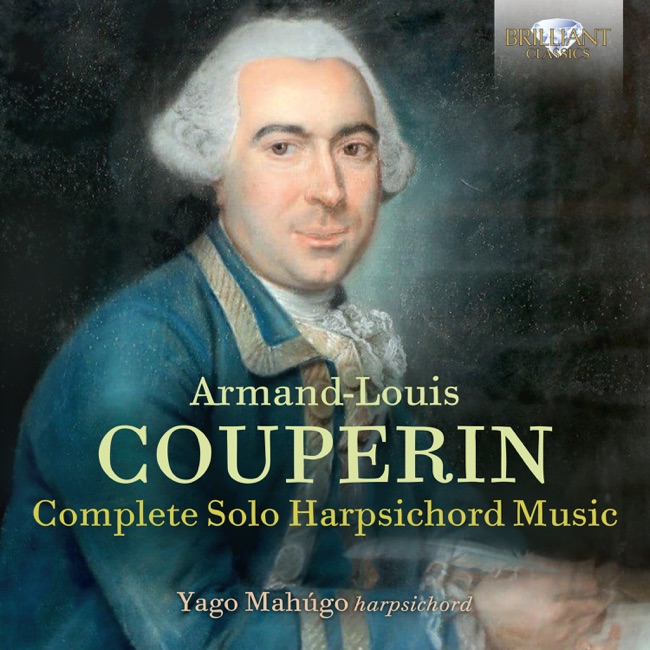
Armand-Louis Couperin
La de Croissy
Released Album
Recent Album
Works Info
Composer:Armand-Louis CouperinGenre:KeyboardStyle:KeyboardCompose Date:1751Average_duration:3:05La de Croissy is a harpsichord piece composed by Armand-Louis Couperin, a French Baroque composer and harpsichordist. The piece was composed in the early 18th century, around 1710, and was premiered in Paris, France. La de Croissy is a suite of six movements, each with its own unique characteristics and style. The first movement, titled "Prelude," is a lively and energetic piece that sets the tone for the rest of the suite. The second movement, "Allemande," is a slower and more contemplative piece, with a more complex harmonic structure. The third movement, "Courante," is a fast and lively dance, with a strong emphasis on rhythm and melody. The fourth movement, "Sarabande," is a slow and stately dance, with a more somber and melancholic tone. The fifth movement, "Menuet," is a light and playful dance, with a more whimsical and carefree character. The final movement, "Gigue," is a fast and lively dance, with a strong emphasis on rhythm and virtuosity. Overall, La de Croissy is a prime example of the French Baroque style, with its emphasis on elegance, refinement, and ornamentation. The suite showcases Couperin's mastery of the harpsichord, with its intricate and complex textures, and its use of ornamentation and improvisation. The suite is also notable for its use of dance forms, which were a popular genre in the Baroque era. In conclusion, La de Croissy is a significant work in the French Baroque repertoire, and a testament to Armand-Louis Couperin's skill as a composer and harpsichordist. Its six movements showcase a range of styles and moods, and its use of dance forms and ornamentation make it a quintessential example of the French Baroque style.More....