Adrian Willaert
Occhio non fu giamai
Released Album
Recent Album
Featured Album
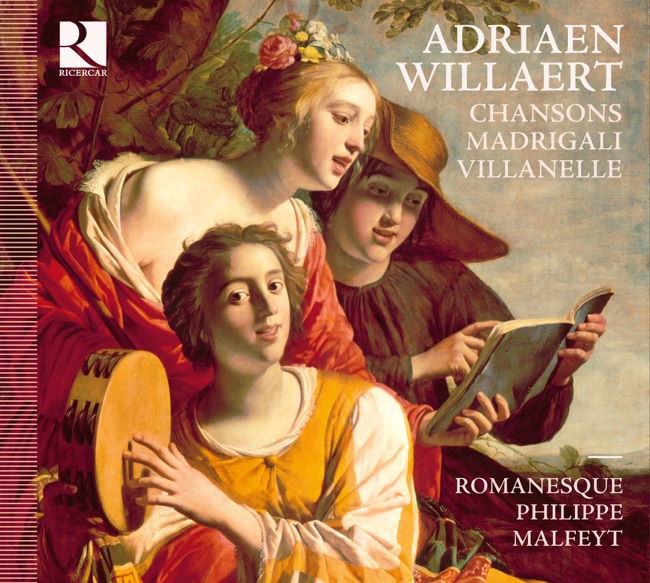
Works Info
Composer:Adrian WillaertGenre:VocalStyle:Vocal MusicPublication Date:1545Average_duration:2:24Adrian Willaert was a Flemish composer who lived from 1490 to 1562. He was one of the most important composers of the Renaissance period, and his music was highly influential in the development of the Venetian school of music. One of his most famous works is "Occhio non fu giamai," a madrigal for five voices. "Occhio non fu giamai" was composed in the mid-16th century, and it premiered in Venice in 1542. The madrigal is written for five voices, and it is characterized by its complex polyphonic texture and expressive harmonies. The text of the madrigal is a love poem, and Willaert's music captures the emotional intensity of the words. The madrigal is divided into three movements. The first movement is marked "Allegro," and it begins with a lively and rhythmic section in which the voices imitate each other in a playful and intricate way. The second movement is marked "Adagio," and it is a more contemplative and introspective section in which the voices weave together in a rich and complex tapestry of sound. The final movement is marked "Allegro," and it is a joyful and exuberant section in which the voices come together in a triumphant and celebratory conclusion. One of the most striking characteristics of "Occhio non fu giamai" is its use of chromaticism. Willaert's music is full of unexpected and expressive harmonies, and he uses chromaticism to create a sense of tension and release that is both dramatic and emotional. The madrigal is also notable for its use of word painting, in which the music reflects the meaning of the words. For example, in the second movement, the voices sing the word "pianto" (weeping) in a mournful and plaintive way, while in the final movement, the voices sing the word "gioia" (joy) in a bright and exultant way. Overall, "Occhio non fu giamai" is a masterpiece of Renaissance music, and it showcases Willaert's skill as a composer and his ability to create music that is both technically complex and emotionally powerful. Its enduring popularity is a testament to its timeless beauty and its place in the canon of Western classical music.More....