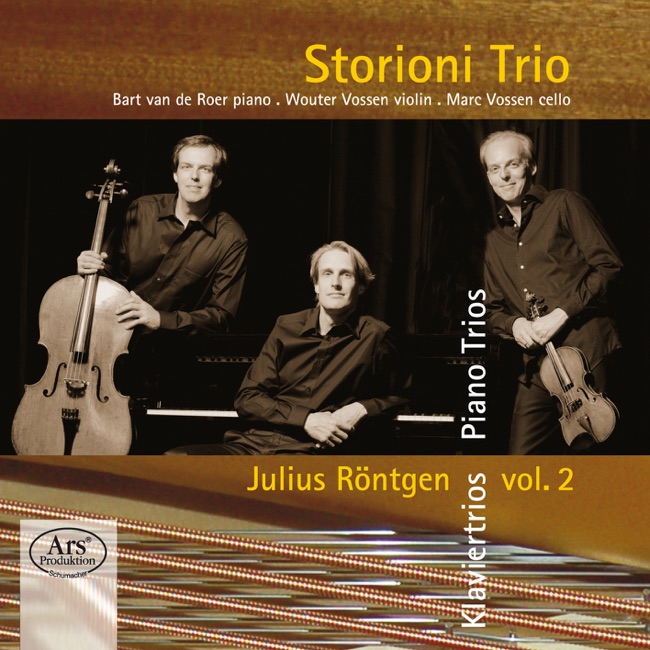
Julius Röntgen
Trio 'Entam', No. 4 in G minor
Works Info
Composer:Julius RöntgenGenre:ChamberCompose Date:1898Average_duration:23:49Movement_count:4Movement ....Julius Röntgen's Trio 'Entam', No. 4 in G minor, was composed in 1918 and premiered on January 22, 1919, in Amsterdam. The trio consists of four movements: Allegro moderato, Scherzo: Allegro vivace, Adagio, and Finale: Allegro con fuoco. The first movement, Allegro moderato, begins with a melancholic melody played by the cello, which is then taken up by the violin and piano. The movement is characterized by its use of counterpoint and the interplay between the three instruments. The second theme is more lively and energetic, with the piano taking the lead. The movement ends with a return to the opening theme. The second movement, Scherzo: Allegro vivace, is a playful and lively piece with a syncopated rhythm. The trio features a call-and-response between the violin and cello, with the piano providing a steady accompaniment. The middle section of the movement is more lyrical, with the violin and cello playing a duet. The third movement, Adagio, is a slow and expressive piece that showcases the trio's ability to play with sensitivity and emotion. The violin and cello play a duet in the opening section, with the piano providing a gentle accompaniment. The middle section features a solo by the cello, which is then joined by the violin and piano. The final movement, Finale: Allegro con fuoco, is a fast and energetic piece that brings the trio to a thrilling conclusion. The movement features a lively theme played by the violin, which is then taken up by the cello and piano. The middle section of the movement is more subdued, with the piano playing a solo. The movement ends with a return to the opening theme, played with even greater energy and intensity. Overall, Trio 'Entam', No. 4 in G minor, is a masterful work that showcases Röntgen's skill as a composer and his ability to write for three instruments with equal importance. The trio's use of counterpoint, interplay between the instruments, and emotional depth make it a standout piece in the chamber music repertoire.More....