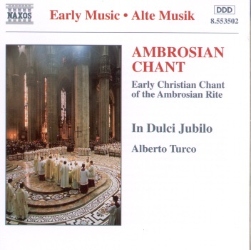
Ambrosian Chant
Si quis sermonem
Released Album
Recent Album
Works Info
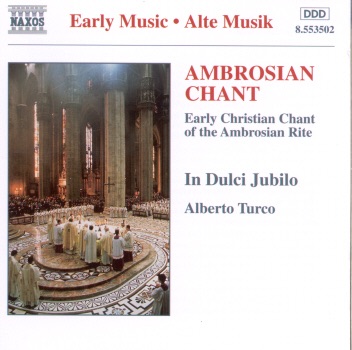
Composer:Ambrosian ChantGenre:MiscellaneousStyle:MiscellaneousAverage_duration:1:30"Si quis sermonem" is a hymn composed in the Ambrosian Chant tradition. It is believed to have been composed in the 4th century by St. Ambrose, the Bishop of Milan. The hymn is typically sung during the Office of Readings on Sundays and feast days. The hymn is divided into three movements, each with its own distinct characteristics. The first movement is a call to worship, inviting the faithful to come and praise God. The second movement is a reflection on the nature of God, emphasizing his power and majesty. The final movement is a prayer for God's mercy and protection. The first movement begins with the words "Si quis sermonem," which translates to "If anyone speaks." This is followed by an invitation to come and worship God, with the words "Venite adoremus Dominum" ("Come, let us adore the Lord"). The melody is simple and repetitive, with a steady rhythm that encourages participation from the congregation. The second movement begins with the words "Deus fortis," which means "Mighty God." This section emphasizes the power and majesty of God, with phrases such as "Tu solus Altissimus" ("You alone are the Most High") and "Tu solus Dominus" ("You alone are the Lord"). The melody is more complex than the first movement, with a greater range of notes and more intricate rhythms. The final movement begins with the words "Domine, miserere," which means "Lord, have mercy." This section is a prayer for God's mercy and protection, with phrases such as "Libera nos, salva nos" ("Deliver us, save us") and "Ne perdas cum impiis animas nostras" ("Do not let our souls be lost with the wicked"). The melody is slower and more contemplative than the previous movements, reflecting the solemnity of the prayer. Overall, "Si quis sermonem" is a beautiful example of the Ambrosian Chant tradition. Its simple melodies and repetitive rhythms make it easy for the congregation to participate in worship, while its reflective lyrics encourage contemplation and prayer. The hymn has been a beloved part of the Catholic liturgy for centuries, and continues to be sung in churches around the world today.More....
Works Music
Released Music