


Louis-Nicolas Clérambault
Caprice sur les grands Jeux
Released Album
Recent Album


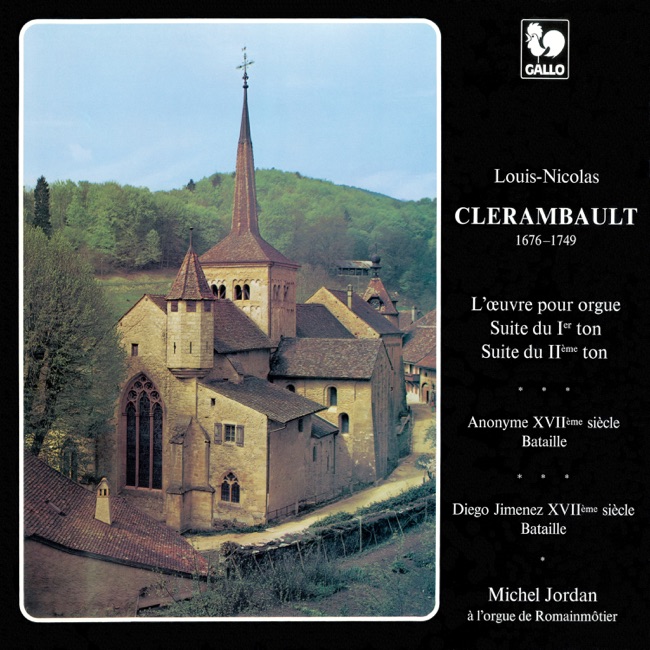
Works Info
Composer:Louis-Nicolas ClérambaultGenre:KeyboardStyle:KeyboardAverage_duration:2:50Louis-Nicolas Clérambault was a French Baroque composer who lived from 1676 to 1749. He was a prominent figure in the French musical scene during his time, and his works were highly regarded by his contemporaries. One of his most famous works is the "Caprice sur les grands Jeux," which was composed for the organ. The "Caprice sur les grands Jeux" was composed in 1710 and premiered in the same year. It is a suite of pieces for the organ, and it consists of three movements. The first movement is a prelude, the second is a fugue, and the third is a caprice. The prelude is a lively and energetic piece that sets the tone for the rest of the suite. It features a series of fast and intricate runs, as well as a number of virtuosic flourishes. The fugue is a more complex and structured piece, with a number of different themes and variations. It showcases Clérambault's skill as a composer, as he weaves together different musical ideas into a cohesive whole. The caprice is the final movement of the suite, and it is perhaps the most famous. It is a lively and playful piece that features a number of different musical ideas and motifs. It is characterized by its fast tempo, intricate runs, and virtuosic flourishes. It is a challenging piece to play, and it has become a favorite of organists around the world. Overall, the "Caprice sur les grands Jeux" is a masterpiece of Baroque music. It showcases Clérambault's skill as a composer and his ability to create complex and intricate works for the organ. Its three movements are each unique and distinctive, and they come together to create a suite that is both beautiful and challenging to play.More....
Works Music
Released Music


6
2:18
7
2:25
8
2:17