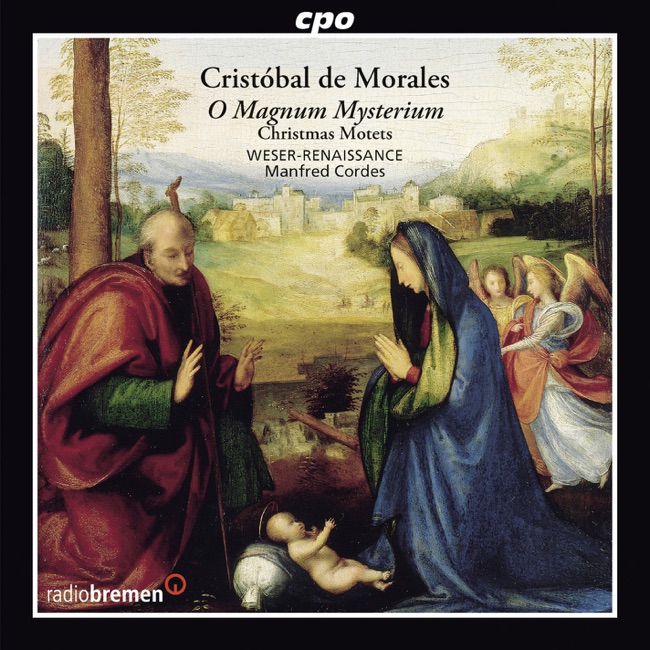
Cristóbal de Morales
Veni, Domine, et noli tardare
Released Album
Recent Album
Works Info
Composer:Cristóbal de MoralesGenre:ChoralStyle:ChoralAverage_duration:5:17'Veni, Domine, et noli tardare' is a sacred motet composed by Cristóbal de Morales, a Spanish composer of the Renaissance era. The piece was composed in the 16th century, during the height of the Renaissance period. It was first performed in the Chapel Royal of King Philip II of Spain in Madrid. The motet is divided into three movements, each with its own distinct characteristics. The first movement is a slow and solemn introduction, with the choir singing in unison. The second movement is more lively and features a polyphonic texture, with the choir singing in four parts. The third movement is a return to the solemnity of the first movement, with the choir singing in unison once again. The piece is characterized by its use of rich harmonies and complex polyphony. Morales was known for his skill in creating intricate and expressive vocal textures, and 'Veni, Domine, et noli tardare' is no exception. The piece also features a strong sense of rhythmic drive, with the choir moving together in a steady pulse. The text of the motet is taken from the Book of Psalms, and is a plea for God to come and save his people. The text is set to music in a way that emphasizes the urgency and desperation of the plea, with the choir singing with great intensity and emotion. Overall, 'Veni, Domine, et noli tardare' is a powerful and moving piece of sacred music, showcasing Morales' skill as a composer and his deep understanding of the spiritual themes of the Renaissance era.More....
Works Music
Released Music