Conlon Nancarrow
Two-part Studies (3) for piano
Released Album
Recent Album
Works Info
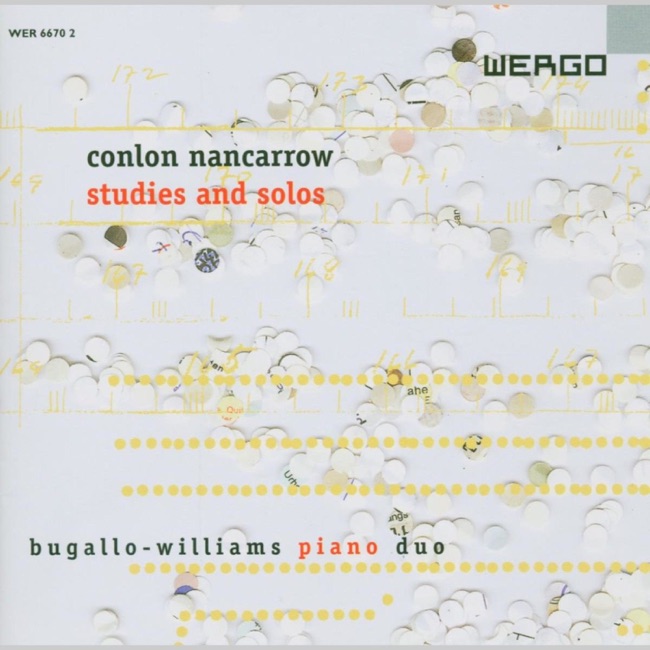
Composer:Conlon NancarrowGenre:KeyboardStyle:EtudeAverage_duration:3:55Movement_count:3Movement ....Conlon Nancarrow's "Two-part Studies (3) for piano" is a set of three pieces composed in 1957. The premiere of the work was in 1962, performed by the composer himself in Mexico City. The three movements of the piece are titled "Study No. 1," "Study No. 2," and "Study No. 3." The characteristic feature of Nancarrow's music is his use of player pianos, which allowed him to create complex rhythmic patterns that were impossible for human performers to execute. In his piano music, Nancarrow sought to replicate the mechanical precision of the player piano, using techniques such as canons, hocketing, and polyrhythms to create intricate and highly syncopated textures. In "Two-part Studies (3) for piano," Nancarrow explores the possibilities of two-part counterpoint, using his characteristic rhythmic complexity to create a dense and intricate web of sound. The first movement, "Study No. 1," is a canon in which the two parts are played at different speeds, creating a constantly shifting rhythmic pattern. The second movement, "Study No. 2," is a hocket in which the two parts alternate rapidly, creating a staccato, percussive effect. The final movement, "Study No. 3," is a polyrhythmic tour-de-force, with the two parts playing in different meters and tempos, creating a complex and constantly evolving rhythmic landscape. Overall, "Two-part Studies (3) for piano" is a masterful exploration of Nancarrow's unique approach to rhythm and counterpoint, showcasing his ability to create complex and highly structured music that is both intellectually stimulating and emotionally engaging.More....
Works Music