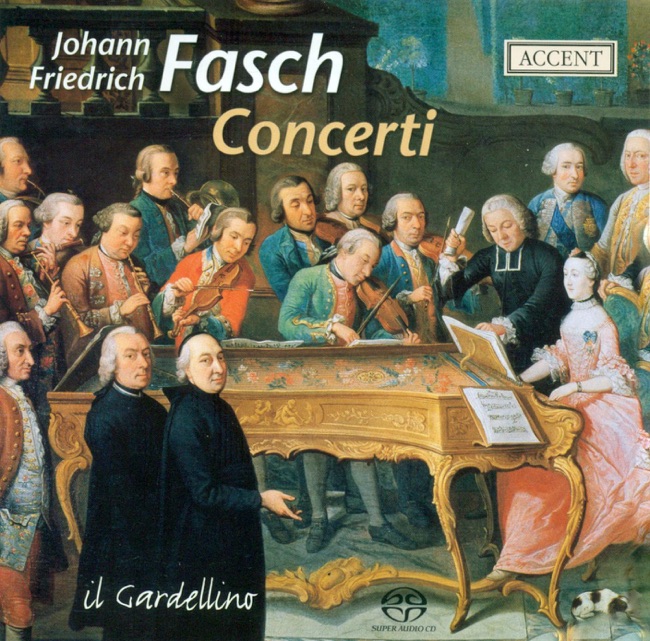
Johann Friedrich Fasch
Concerto for violin, oboe, strings & continuo in D minor, FWV L:d4
Released Album
Recent Album
Works Info
Composer:Johann Friedrich FaschGenre:ConcertoStyle:ConcertoAverage_duration:8:51Movement_count:3Movement ....Johann Friedrich Fasch's Concerto for violin, oboe, strings & continuo in D minor, FWV L:d4, was composed in the early 18th century. The exact date of composition is unknown, but it is believed to have been written between 1715 and 1720. The concerto was premiered in the court of Zerbst, where Fasch was employed as a Kapellmeister. The concerto consists of three movements: Allegro, Largo, and Allegro. The first movement, Allegro, is in a fast tempo and features a lively dialogue between the violin and oboe. The second movement, Largo, is a slow and expressive adagio that showcases the lyrical qualities of both instruments. The final movement, Allegro, is a lively and energetic dance-like movement that brings the concerto to a thrilling conclusion. The concerto is characterized by its virtuosic solo parts, intricate counterpoint, and rich harmonies. Fasch's use of the oboe and violin as solo instruments creates a unique and dynamic sound that is both expressive and engaging. The concerto also features a prominent continuo part, which provides a solid foundation for the soloists and adds depth and richness to the overall sound. Overall, Fasch's Concerto for violin, oboe, strings & continuo in D minor, FWV L:d4, is a masterful example of Baroque concerto writing. Its intricate counterpoint, virtuosic solo parts, and rich harmonies make it a timeless work that continues to captivate audiences today.More....
Works Music