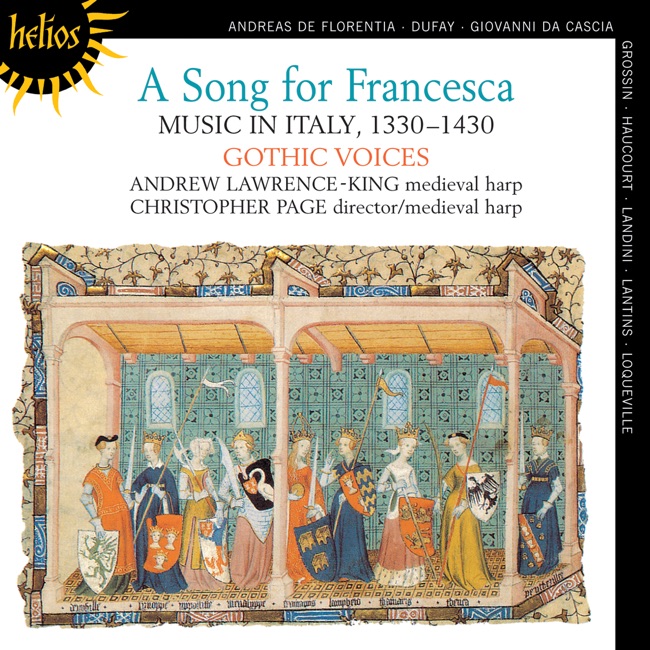
Richard Loqueville
Pour mesdisans ne pour leur faulx parler
Works Info
Composer:Richard LoquevilleGenre:VocalStyle:RoundAverage_duration:1:52'Pour mesdisans ne pour leur faulx parler' is a chanson composed by Richard Loqueville, a prominent French composer of the late Renaissance period. The chanson was composed in the early 16th century, although the exact date is unknown. It is believed to have premiered in the court of King Francis I of France, who was a patron of the arts and a great supporter of music.$$$'Pour mesdisans ne pour leur faulx parler' is a chanson, which is a type of secular vocal composition popular during the Renaissance. It is written for multiple voices, typically four, and is characterized by its polyphonic texture and expressive melodies. The chanson is set in a duple meter and follows a ternary form, consisting of three distinct sections.$$$The first movement of 'Pour mesdisans ne pour leur faulx parler' is lively and energetic, featuring imitative counterpoint between the voices. The melody is highly ornamented, with frequent use of trills, turns, and other embellishments. The harmonic progression is relatively simple, with frequent use of consonant chords and occasional dissonances for expressive effect.$$$The second movement of the chanson is more lyrical and introspective. The voices sing in homophony, with the melody carried by the highest voice and the other voices providing harmonic support. The harmonies are rich and expressive, with occasional use of suspensions and other dissonances to create tension and release.$$$The final movement of 'Pour mesdisans ne pour leur faulx parler' returns to the lively and energetic character of the first movement. It features a lively dance-like rhythm and frequent use of syncopation. The voices engage in playful imitative counterpoint, creating a sense of joyful exuberance.$$$Overall, 'Pour mesdisans ne pour leur faulx parler' is a prime example of the chanson genre, showcasing Loqueville's skill in composing for multiple voices. Its expressive melodies, rich harmonies, and intricate counterpoint make it a delightful and engaging piece of music from the Renaissance period.More....
Works Music
Featured Music